HSBC Bank and SoftBank Robotics America Welcome “Pepper” the Robot
June 26, 2018 A partnership between HSBC Bank and SoftBank Robotics America came to fruition this morning when a robot named Pepper was introduced to media at HSBC’s North American flagship retail branch on Fifth Avenue in midtown Manhattan.
“Thank you for joining us to make history today,” HSBC Head of Innovation Jeremy Balkin said at the flagship bank.
Pepper is the first robot to operate at a retail bank in North America, according to Julien Seret, VP of Global Product at SoftBank Robotics America. Pepper is four feet tall and can hear, speak and move its head to simulate eye contact. You can interact with Pepper by speaking to it or by tapping the tablet on its chest.
“We’re not replacing people, we’re giving them more time to do what they’re good at,” Seret told AltFinanceDaily.
Seret said that there are already 15,000 Pepper robots being used in throughout the world, many of them in the hospitality industry. There is a Pepper robot that greets visitors at the Mandarin Hotel in Las Vegas and at least one at the Oakland airport in California. They are helpful to provide any repetitive information and are also used at hospitals.
 “Pepper is great for engagement with kids,” Seret said of children at hospitals.
Pablo Sanchez, Head of Retail Banking at HSBC, said that HSBC staff brought Pepper outside on the street yesterday for two minutes and 200 people surrounded the robot. Of the onlookers, one came in to learn more about HSBC’s products and then opened multiple accounts. With foot traffic at the Fifth Avenue flagship branch of 18 million people a year, part of Pepper’s appeal is to draw in potential customers.
“But [Pepper] is not just a gimmick,” Sanchez said.
Right now, Pepper mostly serves the role of a knowledgeable greeter, answering questions like “Where can I deposit a check?” Pepper will tell people where to find the ATM machines. But Sanchez said that down the road Pepper could help people open accounts.
While Pepper is capable of facial recognition and collecting and storing other data, Pepper doesn’t that because of privacy laws that SoftBank Robotics and HSBC must abide by and are very respectful of, said Head of Studio at SoftBank Robotics Omar Abdelwahed. But Abdelwahed said that Pepper would be capable of recognizing a regular hotel guest, knowing that the guest is part of a loyalty program and then upgrading the guest’s room.
A Pepper robot is $25,000 to buy, although SoftBank is mostly using a leasing model where users pay about $16,000 for the robot.
Tech Changes Lending And Payments The World Over
June 25, 2018 On a business trip to China last summer, Matt Burton had plenty of money in his wallet but it was practically useless.
Case in point: He had a lengthy standoff with a Shanghai taxi driver who insisted on a mobile-phone payment. “I spent 20 minutes arguing with the cabbie,” says Burton, one of the founding partners at Orchard Platform, a leading provider of technology and software to the alternative lending industry. “You’d think that — out of all of the professions — a taxi driver would accept cash.”
The New Yorker finally convinced the cab driver to take the payment in renminbi, China’s paper currency. The incident, meanwhile, is illustrative of how deeply and widely mobile payments have penetrated the huge Chinese market. “No one in China carries wallets anymore,” Burton reports. “Everyone pays with their smart-phones. Even the elderly women selling vegetables on the side of the road accept mobile payments,” he adds. “Cash has become a hassle.”
Welcome to China’s financial technology revolution. Almost overnight, China’s population graduated from calculating with the 16th-century abacus to showcasing what is arguably the world’s most sophisticated system of mobile payments. Thanks to financial technology, China is fast becoming a cashless economy. China is just one place outside the U.S. where financial technology is catching on in a big way. As Americans remain, for the most part, wedded to suburban drive-in banks, walk-up automated teller machines, and plastic credit and debit cards, the rest of the world is rapidly embracing digital solutions. And nowhere is that happening more dramatically than in China.
According to the most recent figures released by China’s Internet Network Information Center, the country had 724 million mobile phone users at the end of June 2017. China’s Ministry of Industry and Information Technology reports, moreover, that consumers paying for everything from food and clothing to utility bills to movie tickets and – you guessed it, cab fare — engaged in 239 billion mobile payment transactions in 2017, a surge of 146 percent over the previous year.
Mobile payments have become a $16 trillion industry in China, the ministry adds, accounting for about half of all such transactions in the world.
And there’s ample room to grow. The World Bank discloses that there are now 772 million Internet users in China, more than double the entire population of the U.S. Yet that leaves 50% of China’s population – mostly in the countryside and rural areas – who are not yet plugged in to the Internet.
 Two Chinese mobile-payment platforms dominate the industry. Ant Financial is the 800-pound-gorilla, its Alipay program boasting 520 million global users on its website. It’s an affiliate of publicly traded Alibaba Group Holding, an online merchandiser known as the “Amazon of China” which was founded by entrepreneur Jack Ma, reputedly the richest man in China.
Alipay not only has bragging rights to roughly 60 percent of China’s digital and online payments market but, in 2013, it overtook PayPal as the global leader in third-party payments. With deep roots in e-commerce, Alipay is the go-to payments option for online shoppers, who are steadily migrating from laptops to mobile devices.
WeChat Pay is the upstart in the duopolistic rivalry. Launched in 2013, nearly a decade later than its rival, it’s a unit of conglomerate Tencent Holdings, a social network and messaging platform often compared to Facebook. As WeChat continues to add subscribers, its Tenpay app has been growing accordingly, eroding Alipay’s market share as new users gravitate to the e-payments program. While WeChat records fewer payments than Alipay, Forbes magazine reports that it claims more users.
 Whatever WeChat’s virtues, Ant Financial continues to chew up the scenery. It recently topped the charts as the world’s “most innovative” fintech in 2017, as reckoned by a research team formed by accounting giant KPMG and H2 Ventures. China scored a hat trick, moreover, as two additional homegrown fintechs — online property-and-casualty insurer ZhongAn and credit-provider Qudian Inc. — took second and third place, respectively, in KPMG/H2’s rankings. For good measure, China also claimed five of the top ten spots on the “most innovative” list, edging out the U.S., which had four.
Financial analysts recently surveyed by the Financial Times reckon Ant Financial’s market valuation at $150 billion, catapulting the company into the rarified status of not just a “unicorn,” but a “super-unicorn.” (Named after the rarely seen mythical one-horned horse, “unicorns” are start-ups valued at $1 billion). So robust is Ant Financial’s market valuation that the global investment community is salivating over its impending initial public offering.
(Ant’s progenitor, Alibaba, holds bragging rights as the largest IPO ever, according to the Financial Industry Regulatory Authority. It raised $21.8 billion in 2014; its NYSE-listed stock was trading at $194.36 in mid-May, essentially in the same league as Apple and Facebook, trading at $188.80 and 187.08, respectively, on Nasdaq.)
“Four of the largest fintech unicorns in the world are coming out of Asia,” notes Dorel Blitz, the Tel Aviv-based head of fintech at KPMG. “The companies are getting bigger and stronger,” he adds, “and you’re beginning to see more direct investment in public fintech companies as well.”
Adds Orchard’s Burton: “I think it shows you how massive the opportunities are outside the U.S.”
Ant Financial and WeChat are also serving as a world-class demonstration project on how fintechs can turn a tidy profit while opening up financial services to large populations who lack access to basic financial services, thereby providing entry to the middle class. The two platforms have provided “financial inclusion for tens of millions, if not hundreds of millions of people” who previously were on the periphery of the banking and financial system, says Kai Schmitz, a fintech lender at International Finance Corporation that lends to private businesses in the developing world.
Once people are making electronic payments on their mobile devices, Schmitz notes, it creates a “pathway” to a whole panoply of financial services, including personal and business loans, savings, insurance, and investments.
“You can create a user profile so that a large part of the population that could not be reached (by traditional financial institutions) are now making payments and can be followed on the data track,” he says.
The World Bank reports that two billion adults and 200 million businesses in the developing world are currently unable to access even basic financial services. Through IFC, the World Bank has invested $370 million in fintech companies operating throughout Asia, the Middle East, Africa and Latin America. The fintechs, an IFC communications manager told AltFinanceDaily, offer “a range of products and services — from e-wallets, virtual banks, lending, and online payments to retail payment points and exchanges.” IFC, she adds, also invests in fintech funds.
Anju Patwardhan is the U.S.-based managing director at CreditEase Fintech Investment Fund, a $1 billion Chinese venture capital firm that invests in fintechs delivering financial services to “unbanked” and “underbanked” populations. “They are living in Africa, Bangladesh, China and elsewhere on less than two dollars a day and have no access to financial services,” she says.
“But there are also a very large number of people who may be technically included in the financial system but still don’t have access to a full range of financial services at reasonable prices,” she adds. “If someone is borrowing from a moneylender or pawnbroker, it doesn’t count (as financial inclusion). In that case, the number of people is very much more than two billion.”
Once phone towers are built and a payments infrastructure is in place, fintechs promising more sophisticated financial services can operate similarly to the settlers who followed pioneers in the U.S.’s westward expansion. That’s been the story in Kenya and other African countries where M-Pesa (“pesa” is Swahili for money) and other mobile-phone payments systems set up shop a decade ago.
Branch International, based in San Francisco but doing business exclusively in emerging and frontier markets for only three years, is one of the settlers. It boasts that it now has the “No. 1 finance app in Africa.” In March, Branch raised $70 million in a second-stage round of debt and equity financing from a group of venture capitalists led by Trinity Partners that included Patwardhan’s CreditEase and the IFC. Patwardhan will serve as an advisor to Branch’s board.
 Branch’s principal business is making loans and micro-loans ranging from as little as $2 to $1,000 in Nigeria, Kenya, and Tanzania. Despite its name, Branch touts itself as a “branchless bank”, all of the credit transactions taking place on mobile devices, says Matt Flannery, Branch’s chief executive and founder. Its average loan amount is $25.
Many of Branch’s customers are individuals and businesses who often had trouble obtaining credit from established financial institutions or were ineligible for loans. But, according to Branch’s website, it’s possible for a prospective borrower to obtain a loan in just a matter of minutes. “Branch eliminates the challenges of getting a loan by using the data on your phone to create a credit score,” the website says. Branch promises privacy, fees that are “fair and transparent,” and terms that “allow for easy repayment” with no “late fees or rollover fees”. “As you pay back on time,” the website also says, “our fees decrease, and you unlock larger loans with more flexible terms.”
The platform, CEO Flannery says, has lent out $100 million dollars to roughly that same number of people. “The formal financial system in African countries is generally composed of old-fashioned banks that are risk-averse and fairly slow to make lending decisions,” he says. “People really appreciate us,” Flannery adds. “I’d say we’re like Uber and they’re the horse-and-buggy.”
The company is growing by 20 percent month-over-month and expects to disburse more than $250 million in 2018. Asked to describe Branch’s typical borrower, Flannery says: “We have some rural users (of Branch’s finance app). But in general we’re serving the commercial middle-class — shopkeepers and entrepreneurs – in urban capitals.” Want to know precisely who Branch’s customers are? “Just go to downtown Lagos (the capital of Nigeria and the largest city on the African continent) and you’ll see all different kinds of businesses and single-owner merchants on street corners,” Flannery says.
Jeff Stewart, the founder and chairman of Lenddo (which recently merged with competitor EFL) asserts that his firm’s machine learning technology and risk modeling techniques, which are being deployed in emerging countries from Costa Rica to The Philippines, have the capacity to assess the “creditworthiness of everyone on the planet.” In the absence of credit history in much of the developing world, he explains, this can done by constructing a risk profile combining both “psychometrics” and a “digital footprint.”
 Psychometrics is a behavioral assessment tool based on a prospective borrower’s “Big Five” personality traits: openness to experience, conscientiousness, extraversion, agreeableness, and neuroticism (OCEAN for short). “What we’ve been able to show,” Stewart asserts, “is that certain personality types have a positive and negative correlation with repayment. It’s not 100 percent accurate. But you can predict the statistical recovery ratio on repayment. You can say that, for a person with a high score, something like 88 out of 1,000 people (with his or her profile) would not repay.”
The digital footprint, which is the second “critical component,” Stewart says, analyzes a prospective borrower’s reliability by reconnoitering their smartphone usage. “We’ll look at everything on your phone,” he says, “How you use the phone. Whom you interact with. When you use your phone. There are thousands of features that generate a digital footprint. Everything from meeting someone at a sports bar to the apps on your phone to things like e-mailed receipts that show your financial activity.”
Such methods help build credit for those lacking credit history while rehabilitating those whose credit history is blemished. And all that’s needed is a smartphone. “We’ve turned the smartphone into a credit bureau,” Stewart says.
The acquisition of smartphones is taking place at a blistering pace, Stewart notes, now that cell phone costs are “at the bottom of the cost pyramid” in many countries. For example, a “low-end Android” now fetches as little as $25 in Africa. “One credible study I’ve seen shows that every 10% percent rise in access to smartphones translates into a 1/2 percent rise in a country’s gross domestic product,” Stewart says.
While the private sector is driving the trend to financial inclusion in China and Africa, India’s government-driven model “is setting a new global standard in using financial technologies to support financial inclusion,” declares Patwardhan of CreditEase, who also lectures at Stanford. “The country has become a giant testing ground for financial inclusion and innovation,” she argues in a recent academic paper, “and may become a role model for other emerging economies.”
India’s state-run effort includes a $1.3 billion digital identity program known as Aadhaar. Under Aadhaar (which means “foundation”), the state issues residents a 12-digit identity number that’s based on their biometric data –such as fingerprints and iris scans — and personal information. The ID number covers more than 1.19 billion residents. In just the first two years after Aadhaar’s 2009 debut, Patwardhan says, more than 250 million Indians were able to open bank accounts.
Jo Ann Barefoot, chief executive at Barefoot Innovation Group in Washington, D.C. and a senior fellow emerita at Harvard’s Kennedy School of Government, agrees. She notes that Aadhaar opened up access to both fintech services and bank accounts to women who were long treated as second-class citizens by the social and economic system. “India’s digital ID program means that wives and daughters have identity now,” she says.
“In the past,” she adds, “only (male) heads of households would have family identity documents and a government card — which would be the equivalent of having a Social Security number in the U.S. But the wife wouldn’t have her own card. So this is a massive door-opener to fintech growth. And it’s also opening up (all areas of) finance to millions and millions of people.”
India’s “digitalization” program, moreover, has entailed development of a national payments network called “unified payments interface,” or UPI. The combination of UPI and Aadhaar as well as other digital initiatives have resulted in “a surge of online lending platforms,” says Patwardhan, citing Capital Float, NeoGrowth, Faircent, LendingKart, Quiklo, IndiaLends, CreditExchange, and Onemi.
The homegrown fintechs, however, will be up against tremendous external pressure as India, with 1.3 billion people and poised to overtake China in population growth, is generating enormous interest from global fintechs. Among outside platforms piling into the country are China’s Ant Financial and WeChat. The former took a $1 billion stake in Paytm, an Indian mobile payments and e-commerce company. Similarly, competitor WeChat’s parent, Tencent, has invested in Hike, a mobile wallet valued at $1.4 billion last June, according to CNBC, exciting investor interest as a unicorn.
U.S. companies are getting into the act too. Google launched digital payments app Tez last September, which “is taking advantage of India’s infrastructure and has already gotten 30 million downloads,” Patwardhan says. In February, Facebook rolled out a peer-to-peer payments feature on WhatsApp. Even Branch’s Flannery has announced that his “branchless bank” plans to earmark part of its $70 million war chest to offer $2-to-$1000 loans on the subcontinent.
Having banned high-denomination paper bills as a way to rein in corruption and aiming at a cashless economy, India has been innovating in ways that “have gone the Chinese one better,” marvels Patwardhan. “Their payment systems going through the UPI network are interoperable,” she notes, for example. “You don’t have to be on the same app or with the same bank. India is now on the cutting edge.”
Hearing on Commercial Financing Disclosures Scheduled in California State Senate
May 7, 2018Update: Link to the LIVE stream is here
 The Senate Judiciary Committee for the State of California will convene for a hearing on the commercial financing disclosures bill at 1:30 PST on May 8th. SB-1235, as its known, previously survived the Senate Committee on Banking and Financial Institutions when it was debated and contested on April 19th. (a video of that hearing is available here)
AltFinanceDaily will attempt to stream the hearing or provide a link to it when it begins. Check back here for more details.
Despite Movement of Negative Bill for MCA and Factoring Industries, Hope for a Solution
April 23, 2018Last week, California State politicians gathered for a hearing on SB 1235, a bill that would require the disclosure of an Annual Percentage Rate (APR) for all loans and non-loans, including MCA and factoring products. This is very problematic because APR (which includes interest rate) cannot be calculated for most MCA and factoring products for one reason: time. What makes merchant cash advance and factoring unique is that the timing of payments is flexible, and therefore unknown.
“It’s impossible to compute,” said veteran factoring lawyer Bob Zadek about calculating APR for most MCA and factoring products. “Interest = principal x rate x time. Since [they] cannot determine how long the advance will be outstanding – since repayment is a function of the borrower’s cash flow – the algebra doesn’t work.”
The bill, introduced by California State Senator Steve Glazer, moved out of the Senate committee on Banking and Financial Institutions and is headed to the Judiciary committee – closer to potential passage. Yet advocates of the MCA industry, one of whom testified in the assembly room in Sacramento, are hopeful.

“There were a number of state senators who clearly understood the problems with applying an APR to a commercial transaction and to a purchase and sale of receivables transaction,” said Katherine Fisher, a partner at Hudson Cook, LLP who spoke on behalf of the Commercial Finance Coalition (CFC). CFC is an alliance of financial companies that educates government regulators and elected officials on issues related to non-bank commercial finance. CFC Executive Director, Dan Gans, told AltFinanceDaily that he believed the committee really understood what Fisher was trying to convey.

Another major advocacy group is the Small Business Finance Association (SBFA). They brought Joseph Looney, COO and General Counsel of RapidAdvance, to testify against SB 1235, and SBFA Chief of Staff Steve Denis sounded optimistic, saying that they have a very good relationship with State Senator Glazer’s office.
“To me, despite the fact that they moved [on] a bill that we’re opposed to through the process,” Denis said. “I think the folks that we’ve been meeting with out there – the senators – they’re all very open to our industry and open to having broader discussion about how to [best] disclose these terms and how to make sure we’re doing what’s in the best interest of small business owners. That’s a real positive, and I’m optimistic that we can get something done.”
As for concern about the bill moving forward, Denis said it’s what he expected.
“It’s just the way the process works in California,” Denis said. “If you look at committee history, they don’t really reject a lot of bills. They like to move bills forward so they can be discussed and negotiated.”
As of this story’s publication, SB 1235’s Judiciary committee hearing had not yet been scheduled.
Update 4/26/18: The hearing is scheduled for May 8, 2018 at 1:30 p.m. PST in Room 112.
Full video of the April 18th hearing below:
What Got Said in The California Senate Hearing About Commercial Loan Disclosures
April 19, 2018
California State Senator Steve Glazer was the reason that representatives from small business finance trade associations were in Sacramento on Wednesday. Glazer’s bill, SB 1235, calls for mandatory APR disclosures on loan and non-loan products alike, even if the transaction is business-to-business and even if the transaction assesses no interest charges and even when no such APR can be calculated or exists.
That proposal caught the attention of several interested groups, including those whose members offer short term small business loans, factoring, and merchant cash advances. Among those who testified in front of the Senate Committee on Banking and Financial Institutions on Wednesday was Joseph Looney, COO & General Counsel of RapidAdvance, who spoke on behalf of the Small Business Finance Association, and Katherine Fisher, Partner at Hudson Cook, LLP, who spoke on behalf of the Commercial Finance Coalition. Each of them were there representing separate constituents with their own individual views.
Transcripts of their testimonies are below:
 “Chairman Bradford, Vice Chair Vidak, and Members of this committee. I am Joseph Looney and I am the General Counsel for a commercial finance company named RapidAdvance. We are a California Finance Lender licensee and have provided more than $200,000,000 in capital to thousands of businesses in California. Today I am providing testimony on behalf of the Small Business Finance Association or SBFA, which is the leading association for companies that provide funding to Main Street businesses. The SBFA is in opposition to Senate Bill 1235 as currently drafted. While there are various issues with the Bill, the overarching concern we have is that it treats small businesses like consumers. States and the federal government have generally refused to treat small businesses the same as consumers when it comes to financing disclosures for two reasons. First, there is a significant concern that imposing consumer disclosures and regulation on small businesses would reduce the flow of capital and negatively impact the economy. Second, small business owners are sophisticated and do not need the same protections provided to consumers. Business owners hire and fire employees, handle taxes and payroll, negotiate with customers and vendors, arrange financing, handle litigation and execute on business strategies every day. Also, businesses look at money differently than consumers. A business gets capital and uses it to make more money or solve a problem in their business. In this scenario, the most important item to the business owner is how fast can they get the money and what are the conditions for getting it. The APR disclosure included in the Bill is problematic as it will create confusion. The CFPB has recently concluded the APR is confusing, does not provide as much value as thought and is extremely complicated for creditors to calculate. In fact, the CFPB is making the APR less important by moving it to the end of some disclosures and completely removing it in some cases. The APR is so complicated to calculate there are numerous pages in the Code of Federal Regulations devoted to explaining the calculation. Additionally, there are pages of guidance on how to handle various consumer products and payment types and what assumptions should be made for various products as well as shielding creditors from liability for minor calculation errors. This Bill does not address any of these issues. It simply takes an APR disclosure requirement for fixed monthly payment consumer finance transactions and concludes it should apply to materially different commercial products. While we do not support the Bill as it imposes consumer disclosures such as the APR on small business transactions, we are supportive of the idea of providing businesses with cost disclosures. Thank you.” |
 “Chairman Bradford and committee members: Thank you for the opportunity to present testimony today regarding SB-1235. My name is Kate Fisher and I am here today on behalf of the Commercial Finance Coalition, a group of responsible finance companies that provide capital to small and medium-sized businesses through innovative methods. Small businesses face a gap in credit availability. Commercial Finance Coalition member companies are trying to close this gap and help spur entrepreneurship so more Americans and Californians can own and operate their own businesses. I also am a lawyer who works with providers of commercial financing on complying with state and federal law. The Commercial Finance Coalition supports California’s efforts to make business financing more transparent. Businesses benefit from having different types of financing available, and being able to comparison shop. SB 1235 would require commercial finance providers to disclose the cost of capital by providing the following helpful disclosures: The Total Amount of Funds Provided These three disclosures will help a California business owner understand and compare the cost of financing across different products. However, the Commercial Finance Coalition opposes requiring an APR disclosure. It’s important to note that SB 1235 aims at providing comparable disclosures across very different financing types. Commercial Finance Coalition members mostly engage in “accounts receivable purchase transactions.” These transactions are also known as merchant cash advance or factoring, and involve a business selling its receivables at a discount. For example, if a business’s sales go down, the business can pay less. If a business’s sales go up, the business can pay more. And if a business is burned down in a fire, the business can pay nothing until it can reopen its doors. SB 1235 would require disclosure of an Annual Percentage Rate (or APR). There are two problems with requiring an APR disclosure or even an “Estimated APR”: First – SB 1235 fails to address the complexity of calculating APR for different types of commercial finance transactions. This creates a significant litigation risk and minefield for finance providers making a good faith effort to disclose APR, and may stifle small business financing in California. Second – Requiring an Estimated APR disclosure creates an unfair disadvantage for offers of “accounts receivable purchase transactions” – or factoring. Again, these transactions are purchases, and do not need to be “paid back” unless the business has sufficient sales. Also, this disclosure could confuse a business owner who is looking for alternatives to lending. I’m very optimistic that California can lead the way in providing businesses with disclosures that are helpful – and not confusing. |
In response, Senator Glazer deferred to the experts who testified but he was not willing to make a key concession in the moment. At Glazer’s prodding, the bill made it out of committee with enough votes, and with the goal of continuing to fine tune the details particularly with respect to APR.
More information surrounding the bill and it’s progress will be made available soon.
Full video of the hearing below:
Industry Representatives to Testify at California Hearing
April 18, 2018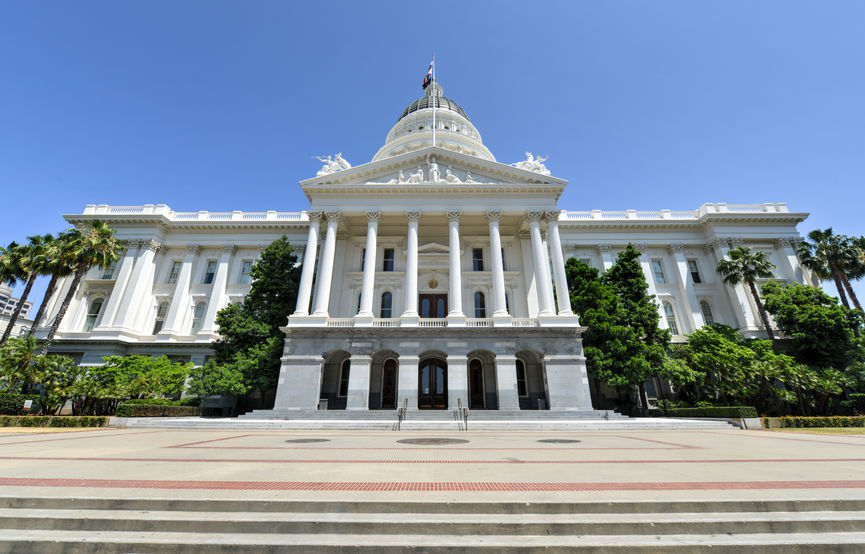
Several people will be testifying in front of the Senate Committee on Banking and Financial Institutions in California today. Among them are Joe Looney, COO & GC at RapidAdvance, who will be speaking on behalf of the Small Business Finance Association, and Katherine Fisher, Partner at Hudson Cook LLP, who will be speaking on behalf of the Commercial Finance Coalition.
At issue is SB 1235, a bill that would require providers of commercial financing to provide disclosures about the cost of that financing to the recipients of the financing.
Industry analysts believe the bill could have implications not just for small business lending but also for factoring and merchant cash advance.
Update: Full video of the hearing below
Peer IQ Insights for Q1 2018
March 30, 2018Peer IQ released its 2018 first quarter “Lending Earnings Insights,” which analyzes lender performance with a focus on credit performance trends. They analyze data across three main lender segments: Fintechs and Non-banks, Large banks, and Card issuers. Below are some highlights from Peer IQ’s analysis on this year’s first quarter:
Credit re-normalization continues
“Credit re-normalization continues across all major lending groups. Credit performance this quarter is mixed. We observe improvements, and record low delinquencies from ONDK, OMF, and FinTechs in particular. LendingClub expects 31 bps lower charge-offs going forward due to tighter credit standards. At Discover – a bellwether for personal loan performance – the net charge off rate jumped 92 bps YOY to 3.62% – the largest increase in several years.
Card issuers
“Card issuers are increasing loan loss reserves at a higher rate than loan growth, indicating expectations of higher losses going forward. American Express increased loan loss provisions 33% although loan growth was only 14%.”
Banks and FinTech
“Bank FinTech partnerships, and M&A continues. Banks are either partnering with FinTechs or investing in beefing up their technology capabilities in payments, lending, digital banking and wealth management. Banks like JP are partnering with Amazon by rolling out co-branded checking accounts and credit cards. A specter is haunting financial services – the specter of Amazon.”
Lenders Pass the Buck on to Borrowers
“Lenders are taking actions to pass rising rates on to borrowers to protect margins and investor returns. Lenders are also trying to reduce all-in funding costs by reducing the credit spreads on their securitizations.”
A Dialogue with Peter Renton: Cryptocurrency and Beyond
March 2, 2018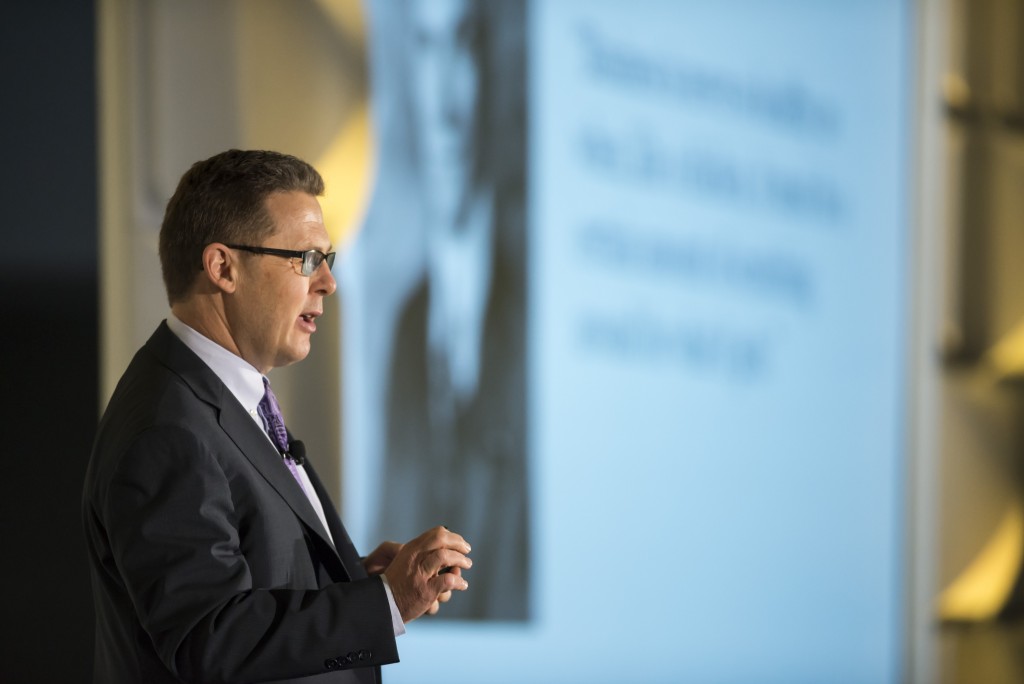
AltFinanceDaily Magazine recently caught up with Peter Renton, founder of Lend Academy, a leading educational resource for the marketplace industry. Through his writing, podcasts and video courses, he’s been helping multitudes of people better understand the industry since 2010. Renton is also the co-founder of LendIt, one of the world’s largest fintech conventions, which recently branched out beyond its marketplace lending focus to include other types of fintech. The flagship U.S. conference will take place April 9 through April 11 in San Francisco. The following is an edited transcript of our discussions.
deBanked: Why did you decide to rebrand LendIt as LendItFintech?
Renton: The main reason is that we have moved beyond the online lending space. While it’s still the core of what we do, it’s not all of what we do anymore. Many of the large online lenders have also moved beyond online lending. Lending is part of financial services, but our attendees want to know what else is important. Our attendees also want to look at other opportunities for expansion. They want to know how other areas of fintech are going to affect their business—topics such as blockchain and digital banking. LendItFintech tells people that lending is what we focus on, but it also makes clear that we’re about more than lending.
deBanked: In addition to your marketplace lending investments, you entered into the cryptocurrency space back in early 2015. Tell us what you’re doing now with respect to cryptocurrency?
Renton: This was not something that I spent much time thinking about back then. At the time, I expected bitcoin to never amount to anything. But I’m interested in financial innovation and I decided to give it a go. I never thought in my wildest dreams that it would get to $10,000. (Editor’s note: In 2017, bitcoin climbed to nearly $20,000; in early February it fell below $8,000 for the first time since Nov. 2017)
I opened up a Coinbase account with $2,000, which got me 10 bitcoins. I have since sold a portion of it gradually as the price of bitcoin went up, and I diversified into a handful of other coins as well. I have recently moved a significant portion of my investment into a privately managed cryptocurrency fund, and I still maintain my Coinbase account too.
deBanked: How are things different now than when you first entered the digital currency market?
Renton: In January 2015, I created my bitcoin account and I don’t think I ever logged in over the next 18 months, or if I did, it was maybe just once or twice. No one was talking about bitcoin back then. It was still on the fringe of fintech. Sure, there were some people focused on it, but it wasn’t part of mainstream media coverage. Then, all of a sudden, it became hot because people love get-rich-quick schemes and hearing about people who hit the big time from nothing. These stories really fuel people’s imagination. Then suddenly bitcoin became one of the biggest phenomena of 2017; no one would have predicted a few years ago that would happen.
deBanked: What are the biggest risks you see with cryptocurrency today and how can investors best overcome these challenges?
Renton: Many people are buying purely on speculation with no thought that bitcoin could go down in price. You hear of people buying bitcoin on their credit card and paying 20 percent interest on that purchase. It’s insane. I feel that cryptocurrencies are here to stay, but I don’t like that they have these massive 20 percent to 30 percent swings in a day. The speculators have helped drive the price up, but they’ve also driven the volatility up and that’s been a bad thing.
deBanked: Do you think cryptocurrency will ever dethrone cash? If so, what will it take to get to that point?
Renton: I feel that some kind of digital currency is inevitable—but whether it’s a Federal Reserve-backed currency or something else remains to be seen. I have an 11-year-old and a 9-year-old and I am confident that at some point in their lifetime there will be no such thing as cash. In China, for example, there are some places where you can’t even use cash. You can go to a street vendor and buy a piece of fruit with your phone. Certainly in the U.S. we’re not there yet, but I think China shows where we are going to be.
Cryptocurrency is only one type of digital cash, and it’s hard to say how it will ultimately fit into the larger picture. To dethrone cash as we know it today, cryptocurrency needs to be a quick and efficient way of transacting, and right now it’s not quick and it’s not cheap.
That said, I believe there will be some kind of digital currency in the future. It will take a long time for the Federal Reserve to say cash is no longer legal tender, but I expect we’ll see some kind of digital currency in the next 10 years for sure.
deBanked: How do you think regulation will change the cryptocurrency landscape? Is it inevitable and, more importantly, do you think regulation of cryptocurrency is necessary to take it beyond the level it is today?
Renton: Right now bitcoin is not systemically important. At a market cap of around $156 billion in early February, if something happens and it completely crashes, it won’t make a dent on the U.S. or world economy. But if bitcoin continues to rise and reaches a market cap of say $16 trillion, and then it falls to zero, that would reverberate around the world. The largest economies that have the most bitcoin would be the most impacted.
At some point governments will step in with regulation. It’s already happening in places like China and South Korea and there are rumors of other governments taking action. I don’t think the largest governments will allow their economy to be at the whim of speculators.
deBanked:AltFinanceDaily: How do you feel about the SEC stepping into regulate ICOs? Is this necessary to protect investors?
Renton: There are certainly some ICOs that are complete scams while others are obviously violating securities laws. But many ICOs have strong legal teams supporting them and are doing it right now. The SEC should absolutely clamp down on those doing the wrong thing, but my hope is that they don’t overreact and throw the baby out with the bathwater.

deBanked: What about online lending? The industry has gone through a lot of changes in its relatively short history. How do you expect to see the competitive landscape change in the next year or so? What about farther out?
Renton: The online lending space has gone through a lot of changes in its short history. I feel like the biggest trend we’re seeing right now is banks launching their own platforms. Take Goldman Sachs with the Marcus online lending platform, for example. More than anything else that has happened in the history of online lending that is among the most telling for the future, I think. Goldman has gone all in with this effort, and that move woke up all the large banks. Top banks like PNC and Barclays are also launching their own initiatives instead of partnering with others, which was surprising to me. I would have thought there would be more partnerships. There are still some, but several banks have decided to do it themselves rather than partnering. Smaller banks, however, that want to get into the space, will likely partner because they can’t afford to do it themselves. While we have seen a few partnerships develop, I expect we will see many more over the next couple of years.
deBanked: What do you see as the biggest risks for online lenders today? How can they best overcome these challenges?
Renton: As an industry, we have to focus on profitability. Profitability comes down primarily to two things. First, you have to get your cost of acquisition down. Some of the companies that failed recently were never able to get their costs of acquisition down to a manageable level. Underwriting is the second piece. Particularly if you’re a balance sheet lender and you’re not underwriting well, you can’t make money. The pullback in the industry in 2016 occurred because many of the major platforms got a little too aggressive in their underwriting. Investors are still paying for some of those mistakes.
Successful companies are ones that have figured out how to profitably acquire customers and how to underwrite effectively. Most of them have learned their lesson, but in business companies sometimes have short memories. We need to keep a close eye on it.
deBanked: What advice do you have for alternative lenders and funders?
Renton: In addition to paying careful attention to profitability and underwriting, another important piece is having diversified funding sources. You want to make sure that you don’t have one big bank or some other source providing 90 percent of your funding. You should really have different kinds of lending sources. Some loans you can fund through a marketplace, some loans you can fund through your balance sheet. It’s good when you’re not reliant on one particular way of funding your loans.
deBanked: How is regulation likely to impact the online lending industry?
Renton: Having support in Congress for the online lending space is important. Congress hasn’t devoted a lot of attention to it in the past few years, but it’s starting to. The Madden decision—which has the potential to lead to significant nationwide changes in consumer and commercial lending by non-bank entities—has created uncertainty in the industry. In states affected by the decision (Connecticut, New York and Vermont) already there has been less access to credit. I’m hopeful that Congress moves ahead with legislation to override the Madden decision that’s having such an impact in the Second Circuit states. People are worried that it could expand nationwide and Congress needs to act so there’s clarification. There’s too much uncertainty right now.
deBanked: Several platforms have closed their doors in the past year or so. Do you expect to see this trend continue?
Renton: There are companies out there still trying to raise money and struggling to do so. That’s a healthy thing for an industry. You want the strong players to survive and thrive and for the weaker ones to go away.
deBanked: How big do you think an online lender has to be to thrive?
Renton: There’s no doubt that scale is important. If you’re a small player, you have to have some kind of niche in order to acquire customers. If you have that, you have the ability to compete. Even with that sometimes, it’s going to be difficult. It’s a pretty complex business. You need to have a lot of staff for compliance and operations and that can be expensive. When you have high fixed costs, you have to have scale to be able to make a profit. That said, I think there’s room for more than just the ultra-large players in the online lending space. I think there will be plenty of opportunity for strong, well-positioned medium-sized players to compete.
deBanked: What about M&A in the industry?
Renton: Valuations at many of the large platforms are way down from where they were several years ago. As long as valuations stay depressed, I think we could see a big acquisition of a major platform this year. Some of these platforms have millions of customers. Having the ability to pick up such a large number of customers instantly through an acquisition could be compelling for the right buyer, such as a large bank.
deBanked: Is this a good time or a bad time to be an online lender in your opinion?
Renton: It is still a good time to be an online lender. We are expanding access to credit and making the world a better place. I have never been more excited about the industry than I am today.