
The Seven-Minute Loan Shakes Up Washington And The 50 States
August 19, 2018 It takes seven minutes for Kabbage to approve a small-business loan. “The reason there’s so little lag time,” says Sam Taussig, head of global policy at the Atlanta-based financial technology firm, “is that it’s all automated. Our marginal cost for loans is very low,” he explains, “because everything involving the intake of information – your name and address, know-your-customer, anti-money-laundering and anti-terrorism checks, analyzing three years of income statements, cash-flow analysis – is one-hundred-percent automated. There are no people involved unless red flags go off.”
One salient testament to Kabbage’s automation: Fully $1 billion of the $5 billion in loans that it has made to 145,000 discrete borrowers since it opened its portals in 2011 were made between 6 p.m. and 6 a.m.

Now compare that hair-trigger response time and 24-hour service for a small business loan of $1,000-$250,000 with what occurs at a typical bank. “Corporate credit underwriting requires 28 separate tasks to arrive at a decision,” William Phelan, president, and co‐founder of PayNet—a top provider of small-business credit data and analysis – testified recently to a Congressional subcommittee. “These 28 tasks involve (among other things): collecting information for the credit application, reviewing the financial information, data entry and calculations, industry analysis, evaluation of borrower capability, capacity (to repay), and valuation of collateral.”
A “time-series analysis,” the Skokie (Ill.)-based executive went on, found that it takes two-to-three weeks – and often as many as eight weeks—to complete the loan approval process. For this “single credit decision,” Phelan added, the services of three bank departments – relationship manager, credit analyst, and credit committee – are required.
The cost of such a labor-intensive operation? PayNet analysts reckoned that banks incur $4,000-$6,000 in underwriting expenses for each credit application. Phelan said, moreover, that credit underwriting typically includes a subsequent loan review, which consumes two days of effort and costs the bank an additional $1,000. “With these costs,” Phelan told lawmakers, “banks are unable to turn a profit unless the loan size exceeds $500,000.”
According to the National Bureau of Economic Research, the country’s very biggest banks — Bank of America, Citigroup, J.P. Morgan Chase, and Wells Fargo—have been the financial institutions most likely to shut down lending to small businesses. “While small business lending declined at all banks beginning in 2008,” NBER’s September, 2017 report announces, “the four largest banks” which the report dubs the ‘Top Four’—“cut back significantly relative to the rest of the banking sector.”
NBER reports further that by 2010—the “trough” of the financial crisis—the annual flow of loan originations from the Top Four stood at just 41% of its 2006 level, which compared with 66% of the pre-crisis level for all other banks. Moreover, small-business lending at the “Top Four” banks remained suppressed for several years afterward, “hovering” at roughly 50% of its pre crisis level through 2014. By contrast, such lending at the rest of the country’s banks eventually bounced back to nearly 80% of the pre-crisis level by 2014.

That pullback—by all banks—continues, says Kenneth Singleton, an economics professor at Stanford University’s Graduate School of Business. Echoing Phelan’s testimony, Singleton told AltFinanceDaily in an interview: “Given the high underwriting costs, banks just chose not to make loans under $250,000,” which are the bread-and-butter of small-business loans. In so doing, he adds, banks “have created a vacuum for fintechs.”
All of which helps explain why Kabbage and other fintechs making small business loans are maintaining a strong growth trajectory. As a Federal Reserve report issued in June notes, the five most prominent fintech lenders to small businesses—OnDeck, Kabbage, Credibly, Square Capital, and PayPal—are on track to grow by an estimated 21.5 percent annually through 2021.
Their outsized growth is just one piece—albeit a major one—of fintech’s larger tapestry. Depending on how you define “financial technology,” there are anywhere from 1,400 to 2,000 fintechs operating in the U.S., experts say. Fintech companies are now engaged in online payments, consumer lending, savings and investment vehicles, insurance, and myriad other forms of financial services.
Fintechs’ advocates—a loose confederacy that includes not only industry practitioners but also investors, analysts, academics, and sympathetic government officials—assert that the U.S. fintech industry is nonetheless being blunted from realizing its full potential. If fintechs were allowed to “do their thing,” (as they said in the sixties) this cohort argues, a supercharged industry would bring “financial inclusion” to “unbanked” and “underbanked” populations in the U.S. By “democratizing access to capital,” as Kabbage’s Taussig puts it, harnessing technology would also re-energize the country’s small businesses, which creates the majority of net new jobs in the U.S., according to the U.S. Small Business Administration.
But standing in the way of both innovation and more robust economic growth, this cohort asserts, is a breathtakingly complex—and restrictive—regulatory system that dates back to the Civil War. “I do think we’re victims of our own success in that we’ve got a pretty good financial system and a pretty good regulatory structure where most people can make payments and the vast majority of people can get credit.” says Jo Ann Barefoot, chief executive at Barefoot Innovation Group in Washington, D.C. and a former senior fellow at Harvard’s Kennedy School. But because of that “there’s been more inertia and slower adoption of new technology,” she adds. “People in the U.S. are still going to bank branches more than people in the rest of the world.”

Barefoot adds: “There are five agencies directly overseeing financial services at the Federal level and another two dozen federal agencies” providing some measure of additional, if not duplicative oversight, over financial services. “But there’s no fintech licensing at the national level,” she says. And because each state also has a bank regulator, she notes, “if you’re a fintech innovator, you have to go state by state and spend millions of dollars and take years” to comply with a spool of red tape pertaining to nonbanks.
At the federal level, the current system— which includes the Federal Reserve, Office of the Comptroller of the Currency (OCC), and the Federal Deposit Insurance Corporation (FDIC)—developed over time in a piecemeal fashion, largely through legislative responses to economic panics, shocks and emergencies. “For historical reasons,” Barefoot remarks, “we have a lot of agencies” regulating financial services.
For exhibit A, look no further than the Consumer Financial Protection Bureau created amidst the shambles of the 2008-2009 financial crisis by the 2010 Dodd-Frank Act. Built ostensibly to preserve safety and soundness, the agencies have constructed a moat around the banking system.
Karen Shaw Petrou, managing partner at Federal Financial Analytics, a Washington, D.C. consultancy, is a banking policy expert who frequently provides testimony to Congress and regulatory agencies. She wrote recently that the country’s banking sector has been protected from the kind of technological disruption that has upended a whole bevy of industries.
“The only reason Amazon and its ilk may not do to banking, brokers and insurers what they did to retailers—and are about to do to grocers and pharmacies,” she observed recently in a blog—“is the regulatory structure of each of these businesses. If and how it changes are the most critical strategic factors now facing finance.”

Cornelius Hurley, a Boston University law professor and executive director of the Online Lending Policy Institute, is especially critical of the 50-state, dual banking system. State bank regulators oversee 75 percent of the country’s banks and are the primary regulators of nonbank financial technology companies. “The U.S. is falling behind other countries that are much less balkanized,” Hurley says. “Our federal system of government has served us well in many areas in our becoming a leading civil society. It’s given us NOW (Negotiable Order of Withdrawal) accounts, money-market accounts, automatic teller machines, and interstate banking. But now it’s outlived its usefulness and has become an impediment.”
Take Kabbage, which actually avoids a lot of regulatory rigmarole by virtue of its partnership with Celtic Bank, a Utah-chartered industrial bank. The association with a regulated state bank essentially provides Kabbage with a passport to conduct business across state lines. Nonetheless, Kabbage has multiple, incessant, and confusing dealings with its bank overseers in the 50 states.
“Where the states get involved,” says Taussig, “is on brokering, solicitation, disclosure and privacy. We run into varying degrees of state legislative issues that make it hard to do business. Right now we’re plagued by what’s been happening with national technology actors on cybersecurity breaches and breach disclosures. We are required to notify customers. But some states require that we do it in as few as 36 hours, and in others it’s a couple of months. We’ve lobbied for a national breach law of four days,” he adds, which would “make it easier for everyone operating across the country.”
Then there’s the meaning of “What is a broker?’” says Taussig, who as a regulatory compliance expert at Kabbage sees his role as something of an emissary and educator to regulators and politicians, the news media, and the public. “The definitions haven’t been updated since the 1950s and now we have wildly different interpretations of brokering and solicitation,” he says. “The landscape has changed with e-commerce and each state has a different perspective of what’s kosher on the Internet.”

Washington State is a good example. It’s one of a handful of jurisdictions in which regulators confine nonbank fintechs to making consumer loans. In a kabuki dance, fintech companies apply for a consumer-lending license and then ask for a special dispensation to do small-business lending.
And let’s not forget New Mexico, Nevada and Vermont where a physical “brick-and-mortar” presence is required for a lender to do business. Digital companies, Taussig says, would have to seek a waiver from regulators in those states. “Many companies spend a lot of money on billable hours for local lawyers to comply with policies and procedures,” Taussig reports, “and it doesn’t serve to protect customers. It’s really just revenue extraction.”
All such restraints put fintechs at a disadvantage to traditional financial institutions, which by virtue of a bank charter, enjoy laws guaranteeing parity between state-chartered and federally chartered national banks. The banks are therefore able to traverse state lines seamlessly to take deposits, make loans, and engage in other lines of business. In addition, fintechs’ cost of funds is far higher than banks, which pay depositors a meager interest rate. And banks have access to the Fed discount window, while their depositors’ savings and checking accounts are insured up to $200,000.
The result is a higher cost of funds for fintechs, which principally depend on venture capital, private equity, securitization and debt financing as well as retained earnings. And that translates into steeper charges for small business borrowers. A fintech customer can easily pay an interest rate on a loan or line of credit that’s three to four times higher than, say, a bank loan backed by the U.S. Small Business Administration.
Kabbage, for example, reports that its average loan of roughly $10,000 typically carries an interest rate of 35%-36%. It’s credits are, of course, riskier than the banks’. The company does not report figures on loans denied, Taussig told AltFinanceDaily, but Stanford’s Singleton says that the fintech industry’s denial rate is roughly 50 percent for small business loans. “Fintechs have higher costs of capital and they’re also facing moderate default rates,” notes Singleton. “They’re not enormous, but fintechs are dealing with a different segment. Small businesses have much more variability in cash flows, so lending could be riskier than larger, established companies.”
 Even so, venture capitalists continue to pour money into fintech start-ups. “I’ve gone to several conferences,” Singleton says, “and everywhere I turn I’m meeting people from a new fintech company. One of the striking things about this space,” he adds, “is that there are lot of aspiring start-ups attacking very specific, very narrow issues. Not all will survive, but someone will probably acquire them.”
Contrast that to the world of banking. Many banks are wholeheartedly embracing technology by collaborating with fintechs, acquiring start-ups with promising technology, or developing in-house solutions. Among the most impressive are super-regionals Fifth Third Bank ($142.2 billion), Regions Financial Corp. ($123.5 billion), and BBVA Compass ($69.6 billion), notes Miami-based bank consultant Charles Wendel. But many banks are content to cater to familiar customers and remain complacent. One result is that there’s been a steady diminution in the number of U.S. banks.
Over the past ten years, fully one-third of the country’s banks were swallowed whole in an acquisition, disappeared in a merger, failed, or otherwise closed their doors. There were 5,670 federally insured banks at the end of 2017, according to the Federal Deposit Insurance Corp., a 2,863-bank, 33.5% decrease from the 8,533 commercial banks operating in the U.S. in 2007.
It does appear that, to paraphrase an old expression, many banks “are going out of style.” In recent years there have been more banking industry deaths than births. Sixty-three banks have failed since 2013 through June while only 14 de novo banks have been launched. In Texas, which is known for having the most banks of any state in the country, only one newly minted bank debuted since 2009. (The Bank of Austin is the new kid on the Texas block, opening in a city known as a hotbed of technology with its “Silicon Hills.”)
One reason there’s so little enthusiasm among venture capitalists and other financial backers for investing in de novo banks is that regulators are known to be austere. “If you’re a company in the U.S.,” says Matt Burton, a founder of data analytics firm Orchard Platform Markets (which was recently acquired by Kabbage), “and you tell regulators that you want to grow by 100 percent a year – which is the scale you must grow at to get venture-capital funding – regulators will freak out. Bank regulators are very, very strict. That’s why you never hear about new banks achieving any sort of scale.”
But while bank regulators “are moving sluggishly compared to the rest of the world” in adapting to the fintech revolution, says Singleton, there are numerous signs that the status quo may be in for a surprising jolt. The Treasury Department is about to issue (possibly by the time this story is published) a major report recommending an across-the-board overhaul in the regulatory stance toward all nonbank financials, including fintechs. According to a report in The American Banker, Craig Phillips, counselor to Treasury Secretary Steven Mnuchin, told a trade group that the report would address regulatory shortcomings and especially “regulatory asymmetries” between fintech firms and regulated financial institutions.

Christopher Cole, senior regulatory counsel at the Independent Community Bankers Association—a Washington, D.C. trade association representing the country’s Main Street bankers—told AltFinanceDaily that, among other things, the Treasury report would likely recommend “regulatory sandboxes.” (A regulatory sandbox allows businesses to experiment with innovative products, services, and business models in the marketplace, usually for a specified period of time.)
That’s an idea that fintech proponents have been drumming enthusiastically since it was pioneered in the U.K. a few years ago, and it’s something that the independent bankers’ lobby, whose member banks are among the most threatened by fintech small-business lenders, says it too can support. Treasury’s Phillips “has said in the past that he’d like to see a level playing field,” the ICBA’s Cole says. “So if (regulators) are going to allow a sandbox, any company could be involved, including a community bank. We agree with him, of course, because we’d like to take advantage of that.”
In March, 2018, Arizona became the first state to establish a regulatory sandbox when the governor signed a law directing that state’s attorney general (and not the state’s banking regulator) to oversee the program. The agency will begin taking applications in August with approval in 90 days, says Paul Watkins, civil litigation chief in the AG’s office. Watkins told AltFinanceDaily that he’s been most surprised so far by “the degree of enthusiasm” from overseas companies. With the advent of the sandbox, he adds, “Landlocked Arizona has become a port state.”
 The OCC, which is part of the Treasury Department, may also revive its plan to issue a national bank charter to fintechs, sources say (EDITOR’S NOTE: This had not yet been implemented before this story went to print. The OCC is now accepting such applications) – a hugely controversial proposal that was put on ice last year (and some thought left for dead) when former Commissioner Thomas J. Curry’s tenure ended last spring. At his departure, the fintech bank charter faced a lawsuit filed by both the New York State Banking Department and the Conference of State Bank Supervisors. (Since then, the lawsuit was tossed out by the courts on the ground that the case was not “ripe” – that is, it was too soon for plaintiffs to show injury).
Taussig, the regulatory expert at Kabbage, reports that the Comptroller of the Currency, Robert J. Otting, has promised “a thumbs-up or thumbs-down” decision by the end of July or early August on issuing fintechs a national bank charter. He counts himself as “hopeful” that OCC’s decision will see both of the regulator’s thumbs pointing north.

The Conference of State Bank Supervisors, meanwhile, has extended an olive branch to the fintech community in the form of “Vision 2020.” CSBS touts the program as “an initiative to modernize state regulation of non-bank financial companies.” As part of Vision 2020, CSBS formed a 21-member “Fintech Industry Advisory Panel” with a recognizable roster of industry stalwarts: small business lenders Kabbage and OnDeck Capital are on board, as are consumer lenders like Funding Circle, LendUp and SoFi Lending Corp. The panel also boasts such heavyweights in payments as Amazon and Microsoft.
Working closely with the fintech industry is a “key component” of Vision 2020, Margaret Liu, deputy general counsel at CSBS, told AltFinanceDaily in a recent telephone interview. CSBS and the fintech industry are “having a dialogue,” she says, “and we’re asking industry to work together (with us) and bring us a handful of top recommendations on what states can do to improve regulation of nonbanks in licensing, regulations, and examinations.
“We want to know,” she added, ‘What the main friction points are so that we can find a path forward. We want to hear their concerns and talk about pain points. We want them to know the states are not deaf and blind to their concerns.”
The Broker: How Zach Ramirez Makes Deals Happen
August 17, 2018 AltFinanceDaily interviewed Zachary Ramirez to find out what makes a successful broker like him tick, how he does it, and what kinds of things he’s encountered along the way.
Title: Founder and Managing Director of ZR Consulting, LLC, a brokerage of 10 people in Orange County, California.
Years in the industry: 6
Age: 29
 Number of brokerage shops he’s started: Three. The first one he created failed after only about three deals, the second one, called Core Financial (that he got in early on with 2 other partners), grew to 27 brokers before it was acquired, and this one is only two months old and has already funded $1 million.
His morning routine:
I get up at about 5:45.
I have my protein shake – banana, protein, coconut oil and whatever else I can find that seems healthy to me.
I get a cup of coffee.
I sit down at my desk and the first thing I do is look at all the leads that came in that night. Sometimes there’s as many as 80. Sometimes there’s as few as 20 or 25. I then distribute the leads to my sales team, so that as soon as they wake up, they have all their leads. After that, I focus on marketing and closing some of the bigger deals.
 Ritual before he closes a deal:
It’s a funny habit that makes me laugh but before I try to close a deal, I visualize myself closing the deal and I beat my chest. I walk around the office beating my chest like an ape, and it’s just hysterical. I get this big adrenaline rush right before I call the merchant. And when I call them, I’m just on fire. Whatever happens, I’m ready for it. And when I’m in that mode, I can’t lose a deal. It’s like impossible.
His first deal:
It was an auto repair shop that needed $75,000 in order to add three new bays for their repair shop. I think I funded it with OnDeck. It was a very smooth deal. My buddy brought it to me. He said the customer needs the money today. And we ended up funding it the same day. It was great.
I was 23 years old and that was the first time I had seen my business capture any revenue. Finally, after a month or two months of straight working, and not finding a single deal, I finally figured out the marketing a little bit and ended up funding that one. I remember we had 10 points in it, so we had $7,500. I was a single guy renting a room, and for me that was a good chunk of money.
What it taught him:
It helped me learn about expense management because that first broker shop I started failed. I lost everything on that shop. I only funded two or three deals and I ended up spending more money than I made. I was very humbled by this. I realized that being a broker isn’t as easy as people think.
What his best merchants have in common:
My favorite merchants understand why they qualify for what they qualify for. We have a deep rapport. I don’t just talk about business. I’ll talk about their family. I’ll talk about trends I see in their industry. I’ll help them understand their financial situation. And my best merchants are the ones that understand that I’m a source of information for them and I can provide them with valuable insights that they might not be aware of. Things that can help them. I’ll help them with marketing a lot…I say, ‘Look, if you talk to these people, they can do this marketing for you.’ And I do stuff like that because it’s increasing their revenue which helps their business. And that can help me do bigger loans for them.
 Largest deal:
It was a $2 million deal. We had three points in it, so we made $60,000.
Favorite funders:
OnDeck. Also, I really like Fundworks, Quickbridge and Kalamata Capital Group. If someone doesn’t say OnDeck, then they’ve got a problem because OnDeck is amazing.
Why?
Because the consistency of their approvals, their competitive rates, the fast and seamless funding process. And especially, the online checkout. The online checkout is godly.
StreetShares Moves Headquarters
August 16, 2018 StreetShares announced yesterday that it has moved to another location in Reston, Virginia in order to accommodate its growing staff, according to the company’s blog. From January of this year to August, SteetShares says it has doubled the size of its workforce and the new space is 10,300 square feet, more than four times the size of the previous office.
Established in 2013 in the home basement of CEO Mark Rockefeller, StreetShares offers term loans, lines of credit and a factoring product, with a focus on funding veteran-owned small businesses. Rockefeller is a veteran himself.
According an SEC filing for StreetShares, for the six months ending December 31, 2017, the company generated $1,533,143 in revenue and spent $3,224,131, for a net loss of $2,673,466. The company also received capital at the beginning of 2018, with the completion of a $23 million series B round in January.
StreetShares’ new office has a “tech” aesthetic.
“No cubicles or offices allowed,” Rockefeller said. “Standing desks, teams working together in pods, as well as glass, metal, and exposed concrete reflect a technology startup. And vintage World War II posters and an enormous American flag remind our team of the special members we serve.”
Underwriting 101—Veteran Funders Share Tools of the Trade
August 12, 2018For brokers, funding partnerships are critical to success. But making the most of these connections can be elusive.
“Transparency, efficiency and a thorough scrubbing on the front end can help the whole process,” says William Gallagher, president of CFG Merchant Solutions, an alternative funder with offices in Rutherford, N.J. and Manhattan.
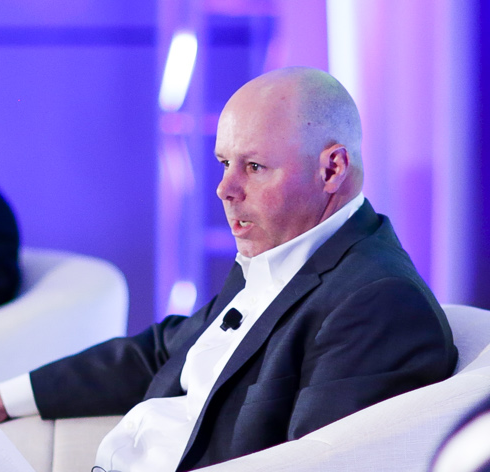
Gallagher recently moderated an “Underwriting 101” panel at Broker Fair 2018, which AltFinanceDaily hosted in May. The panel featured a handful of representatives from different funding companies discussing various hot-button items including striking the proper balance between technology and human underwriting, trade secrets of the submission process and stacking. Here are some major takeaways from that discussion and from follow-up conversations AltFinanceDaily had with panel participants.
Each funder has slightly different processes and requirements. Brokers need to understand the different nuances of each firm so they know how to properly prepare merchants and send relevant information, funders say.
Many brokers sign up with funders without delving deeper into what the different funders are really looking for, says Jordan Fein, chief executive of Greenbox Capital in Miami Gardens, Fla., that provides funding to small businesses.

For example, there are a growing number of companies that rely more heavily on advanced technology for their underwriting, while others have more human intervention. Brokers need to know from the start what the funder’s underwriting process is like—the nitty gritty of what each funder is looking for—so they can more effectively send files to the appropriate funder.
“They will look poor in front of the merchant if they don’t really know the process,” Fein says.
Certainly, it’s a different ballgame for brokers when dealing with funders that are more human based versus more automated, says Taariq Lewis, chief executive and co-founder of Aquila Services Inc., a San Francisco-based company that offers merchants bank account cash flow analysis as well as funding that ranges from 70 days to 100 business days.

At Aquila, the process is meant to be totally automated so that brokers spend more time winning deals faster, with better data to do so. This means, however, that some of the underwriting requirements differ from some other industry players. Aquila’s most important requirement is that a merchant’s business is generally healthy and shows a positive history of sales deposits. Other funders require documents and background explanations, whereas Aquila strives to be completely data-driven, Lewis says. These types of distinctions can be important when submitting deals, funders say.
Stacking is another example of a key difference among funders that brokers need to understand. It’s a controversial practice; some funders are open to stacking, while others will only take up to a second or third position; a number of funders shy away from the practice completely. Brokers shouldn’t waste their time sending deals if there’s no chance a funder will take it; they have to do their research upfront, funders say.
Most times, brokers “don’t invest enough time to understand the process,” Fein says.
Some brokers may feel competitive pressure to sign up with as many funders as possible, but it can easily become unwieldy if the list is too long, funders say. Better, they say, to deal with only a handful of funders and truly understand what each of them is looking for.

“There are brokers that deal with 20 [funders], but I don’t think it’s a good, efficient practice,” says Rory Marks, co-founder and managing partner of Central Diligence Group, a New York funder that provides working capital for small businesses.
He suggests brokers select funders that are easy to work with and responsive to their phone calls and emails. Not all funders will pick up the phone to speak with brokers who have questions, but he believes his type of service is paramount, he says. “It’s something we do all the time,” he says.
He also recommends brokers consider a funder’s speed and efficiency of funding as well as document requirements and their individual specialties. There are plenty of funders to choose from, so brokers shouldn’t feel they have to work with those that are more difficult, he says.
To prevent a broker’s list from becoming too unwieldy, Gallagher of CFG Merchant Solutions suggests brokers have two to three go-to funders in each category of paper from the highest quality down to the lowest. Having a few options in each bucket allows greater flexibility in case one funder changes its parameters for deals, he says.
Brokers “sometimes just shotgun things and throw things against the wall and hope they stick,” Gallagher says. Instead, he and other funders advocate a more precise approach –proactively deciding where to send files based on what they know about the merchant and research they’ve done on prospective funders.
It used to be that when sending files to funders, brokers would provide some background on the company in the body of the email. This was helpful because even a few sentences can help funders gain some perspective about the company and better understand their funding needs, says Fein of Greenbox Capital.
These days, however, Fein says he’s getting more emails from brokers that simply request the maximum funding offer, without providing important details about the business. The financials on ABC importing company aren’t necessarily going to tell the whole story because funders won’t know what products they import and why the business is so successful and needs money to grow. Providing these types of details could help sway the underwriting process in a merchant’s favor. Brokers don’t have to say a lot, but funders appreciate having some meaty details. “A few sentences go a long way,” Fein says.
Many brokers make the mistake of overpromising what they can get for merchants and how long the process could take, funders say. Both can cause significant angst between merchants and brokers and between brokers and funders.
If a company is doing $15k in sales volume and asking for $50k in funding, the broker should know off the bat, the merchant is not going to get what he wants, says Marks of Central Diligence Group. By managing merchant’s expectations, brokers are doing their clients—and themselves—a favor. Why waste time on deals that won’t fund because they are fighting an uphill battle? Brokers shouldn’t knowingly put themselves in the position of having to backtrack later, Marks says.
Instead, explain to the merchant ahead of time he’s likely to receive a smaller amount than he’d hoped for. To show him why, walk the merchant through a general cash flow analysis using data from the past three to four months, says Gallagher of CFG Merchant Solutions. This will help merchants understand the process better, and it can help raise a broker’s conversion rate, he says.
“It’s about setting realistic expectations,” Marks says.
Sometimes brokers take only a cursory look at a merchant’s financials, and because of this, they overlook important details that can delay, significantly alter, or sink the underwriting process, funders say.
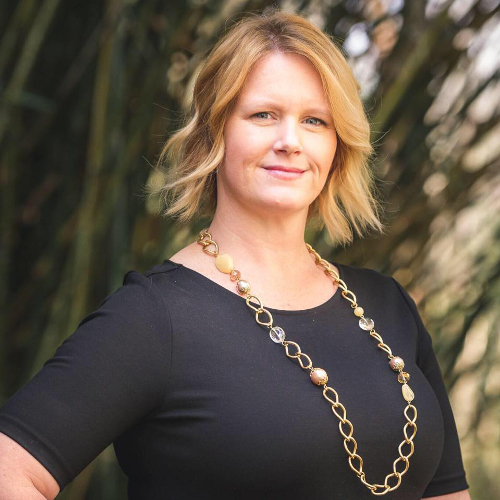
Heather Francis, founder and chief executive of Elevate Funding in Gainesville, Fla., offers the hypothetical example of a merchant who has total deposits of $80k in his bank account. On its face, it may look like a solid deal and the broker may make certain assurances to the merchant. But if it comes out during underwriting that most of the deposits are transfers from a personal savings account as opposed to sales, there can be trouble. Based on the situation, the merchant may only be eligible for $30k, but yet the owner is expecting to receive $80k based on his discussions with the broker. Now you have an unhappy merchant, a frustrated broker and a funder who may be blamed by the merchant, even though it’s really the broker who should have dug deeper in the first place and then managed the merchant’s expectations accordingly. “We see that a lot,” says Francis.
To get the most favorable deals for merchants, some brokers only present the rosiest of information in the hopes that the funder won’t discover anything’s amiss. Several panelists expressed frustration with brokers who purposely withhold information, saying it puts deals at risk and makes the process much less efficient for everyone.
Marks of Central Diligence Group offers the hypothetical example of a merchant whose sales volume dipped in two of the past six months. To push the deal through, a broker might submit only four months of data, hoping the funder doesn’t ask about the other two months. Some funders might accept only four statements, but other shops will want to see six. If a funder then asks for six, the broker’s omission creates unnecessary friction, he says.
Funders say it’s better to be upfront and disclose relevant information such as sales dips or some other type of temporary setback that weighs a merchant’s financials. Kept hidden, even small details could easily become game-changers—or deal-breakers—a losing proposition for merchants, brokers and funders alike.
“If we have the full story upfront and we’re going in eyes wide open, we can look at the file in a little bit of a different way,” says Gallagher of CFG Merchant Solutions.
Stripe Becomes a Digital Credit Card Issuer
August 8, 2018 Stripe has recently started offering a new API, or programming feature, that allows its merchants to offer physical or virtual credit cards to their employees. The product, called “Issuing,” is still being tested and is currently by invitation only, although it does appear as an offering on the company’s website. Merchants can request an invitation.
According to the website, creating a card is an easy three step process that involves providing identifying information about the cardholder, then literally creating the card (physical or virtual) and finally, activating it. Physical cards can be shipped either to the merchant or the cardholder, while virtual cards are available to use immediately.
The merchant can manage cards by creating restrictions, like maximum purchase amounts, charges can be disputed, and physical cards can have customizable designs, just like cards issued from a bank. However, Stripe is not a bank. Stripe did not respond in time for this story, but it is likely that the company has partnerships with companies that can underwrite and offer lines of credit to their customers. On the Stripe website, it indicates three of its financing partners: Funding Circle, Iwoca and Clearbanc.
Stripe is a payment platform that facilitates online payments. The company takes 2.9% plus 30 cents of every successful charge a merchant makes. Stripe customers are small business owners, but also include giant companies like Facebook and Target. Founded in 2011 by brothers John and Patrick Collison, Stripe is headquartered in San Francisco. It also has offices in Dublin, London, Paris, Singapore and Tokyo, and it employs more than 1,100 people.
Yellowstone Capital Funded $68.5M in July
August 1, 2018Yellowstone Capital originated $68.5 million in funding to small businesses in July, according an announcement the company made on social media. The figure was slightly larger than what they produced in June.
The top 3 sales reps funded a combined 553 deals for $21 million.
Interest in Equipment Finance M&A is Strong
July 19, 2018
Interest in mergers and acquisitions (M&As) in the equipment finance industry has been high in the first half of 2018, according to The Alta Group, a consultancy dedicated to equipment leasing and asset finance.
This follows a May 22 Reuters report announcing that global M&As reached $2 trillion in 2018, which at the time of publication, was a record for the value of deals in that period. This record was achieved in part by the $11.1 billion merger of GE’s (GE.N) transportation business with rail equipment maker Wabtec (WAB.N).
Echoing the robust global M&A climate, Cincinnati-based Verdant Commercial Capital, a large commercial equipment finance company, announced on Monday that it had acquired Intech Funding Corp., which does financing and leasing for manufacturing companies. (The Alta Group was involved in this acquisition). No financial terms were disclosed for this acquisition.
“Several of our clients had not considered selling their businesses yet,” said Bruce Kropschot, Senior Managing Director of The Alta Group, “but M&A market conditions are so favorable now they concluded they could not risk missing out on the opportunity to sell while prices were high and there were many interested acquirers.”
In a statement, Kropschot attributed this favorable climate for M&As to “the relatively high multiples reflected in the stock market and the M&A market, interest rates that are still quite low, substantial liquidity in corporations and financial institutions, and the recent tax legislation with its lower corporate income tax rates and 100% expensing on equipment purchases.”
The Alta Group has clients throughout the world and has been representing equipment leasing and finance companies since 1992. It is headquartered in Glenbrook, Nevada and employs 60 consultants worldwide.
Like Bureau of Consumer Financial Protection, Court Declares FHFA Unconstitutional
July 19, 2018The Bureau of Consumer Financial Protection (Bureau), created largely by Democratic politicians in the wake of the 2008-10 financial crisis, has not been the most popular government agency under the current administration. That said, a June court decision declared that the agency itself is, in fact, not very democratic.
The controversial decision came from District Judge Loretta Preska of the New York’s Southern District who declared the Bureau to be unconstitutional based on its single directorship structure. (The current structure features a director who has full control over decisions with no requirement of a vote or a consensus from other colleagues or parties).
This week, the Court of Appeals for the Fifth Circuit made a ruling against the Federal Housing Finance Agency (FHFA) for the same reason – because it deemed the agency to be unconstitutional based on its single directorship structure.

The FHFA was established by the 2008 Housing and Economic Recovery Act to ensure that Fannie Mae, Freddie Mac and the Federal Home Loan Bank System are operating in a safe and sound manner so they can serve as a reliable source of liquidity and funding for housing finance and community investment.
The defense for this decision against the FHFA cites heavily from a 2016 ruling, written by Supreme Court Justice nominee Brett Kavanaugh, that asserts that the Bureau is unconstitutional in large part because the director cannot even be removed the president. Part of this week’s FHFA decision is as follows:
“Congress encased the FHFA in so many layers of insulation—by limiting the President’s power to remove and replace the FHFA’s leadership, exempting the Agency’s funding from the normal appropriations process, and establishing no formal mechanism for the Executive Branch to control the Agency’s activities—that the end ‘result is a[n] [Agency] that is not accountable to the President.’ The President has been ‘stripped of the power [the Supreme Court’s] precedents have preserved, and his ability to execute the laws—by holding his subordinates accountable for their conduct—[has been] impaired.'”
The 2016 decision decreeing that the Bureau is unconstitutional is similar:
“Other than the President, the Director of the Bureau is the single most powerful official in the entire United States Government, at least when measured in terms of unilateral power. That is not an overstatement. What about the Speaker of the House, you might ask? The Speaker can pass legislation only if 218 Members agree. The Senate Majority Leader? The Leader needs 60 Senators to invoke cloture, and needs a majority of Senators (usually 51 Senators or 50 plus the Vice President) to approve a law or nomination. The Chief Justice? The Chief Justice must obtain four other Justices’ votes for his or her position to prevail…”
Clearly, some judges feel that the Bureau and the FHFA are unconstitutionally formed. Whether these agencies will change their structure in response to these decisions is unclear.