
OnDeck Takes Advantage of New Same-Day ACH Technology
April 12, 2019 Same-day ACH is here, thanks to NACHA’s planned upgrade, and OnDeck, a small business lender, has already incorporated it into its platform.
Shaleen Prakash, OnDeck’s Vice-President of Product Management, told AltFinanceDaily:
“We are hyper-focused to get customers faster access to funding that’s already been
approved for them.”
Small business owners can now access up to $25,000 in funding on the same day they book a loan or make a withdrawal.
“As long as the request is made before the cutoff, funds reach the account by 5 p.m. It doesn’t matter if you are in New York or California,” Prakash said. The same-day cuttoff time and the $25,000 limit are also set by NACHA. OnDeck can lend larger amounts, obviously, up to $500,000, but not through same-day ACH.
OnDeck has already processed “millions of dollars over the new rails,” said Prakash. “Anybody who cares about when they get money and when it gets debited back from their account will benefit from this service. If there’s a cash crunch, the predictability and certainty from same day funding are fundamental to managing a business,” he added.
OnDeck’s same-day funding model is two-pronged, working both for accessing capital or processing payments to the online lender. On the cash management side, entrepreneurs gain access to the funds when they need it, even if they forget about a payment due on a Friday morning.
“A small business owner has to pay suppliers on time or meet payroll. Now they can be certain that the funds will reach the account and they will be able to manage cash flow better,” said Prakash.
OnDeck’s same-day transfers are equally important for making payments back to the lender.
“Think about the small business owner dealing with the challenges of managing cash already and how some have cash sitting in their account for three days,” he said.
Meanwhile, if OnDeck says an account is debited on a Wednesday, they really mean the funds are debited from the account on Wednesday.
NACHA, the National Automated Clearing House Association, created same-day ACH transfers in three phases. Phase one and two were limited to credit and debit transactions, which left out some of the small business population. It didn’t make sense for OnDeck to integrate the technology until now.
“Through the process of providing a loan to customers, we collect their account information, so we already have it. Now we can meet their needs of getting funding faster without introducing any new friction to the customers,” he added.
OnDeck, which boasted origination volume of $658 million in Q4 2018, is scheduled to report Q1 2019 financial results on May 2.
Online Lenders Square Off, Offer The Kabbage In Brooklyn Food Court
April 10, 2019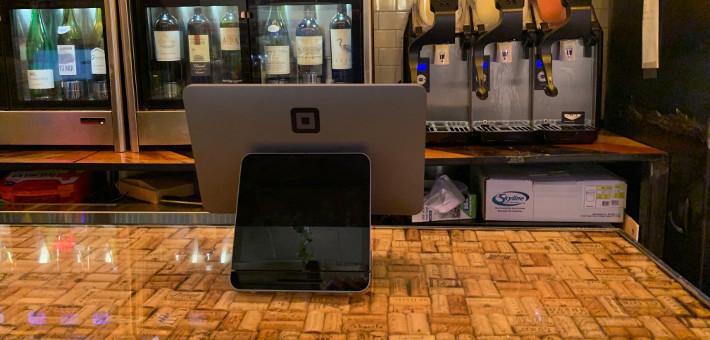
In a fast gentrifying section of Downtown Brooklyn, online lenders are waging a silent turf war. Each day, hungry consumers flock to DeKalb Market, a subterranean hipster food court where lunch and a drink can cost $17. The maze-like space with retro neon signs and rustic wood countertops offers a dizzying array of cuisines, and with it, the opportunity to indulge in one’s own individual preferences. But if you’re looking for the vendor’s payment machines, you’ll notice an eerie sameness amidst a cacophony of color.

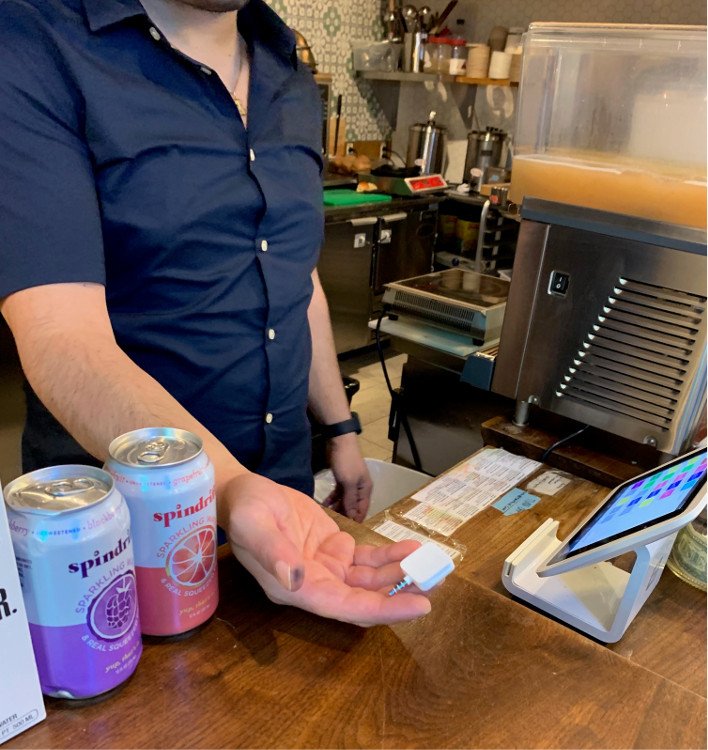
Square processed $85 billion in payments in 2018 and here in DeKalb Market, 75% of the vendors AltFinanceDaily surveyed relied on Square’s Point-Of-Sale technology. The publicly traded company generated $2.5 billion in payment transaction fees last year alone, but it’s the add-on products like Instant Deposit, Cash Card, Caviar, and Square Capital that are propelling the growth. 244,000 businesses received a loan from Square in 2018 for a total of $1.6 billion. Borrowing is as simple as clicking a few buttons on the POS dashboard, making Square the presumptive lender of choice for businesses in the food court.
But the rankings on a national level say that Square trails behind Kabbage, an online lender with no reliance on a POS system. Kabbage’s growth trajectory has been epic, once a lending service for eBay merchants, the company is now one of the largest online small business lending companies in the United States.
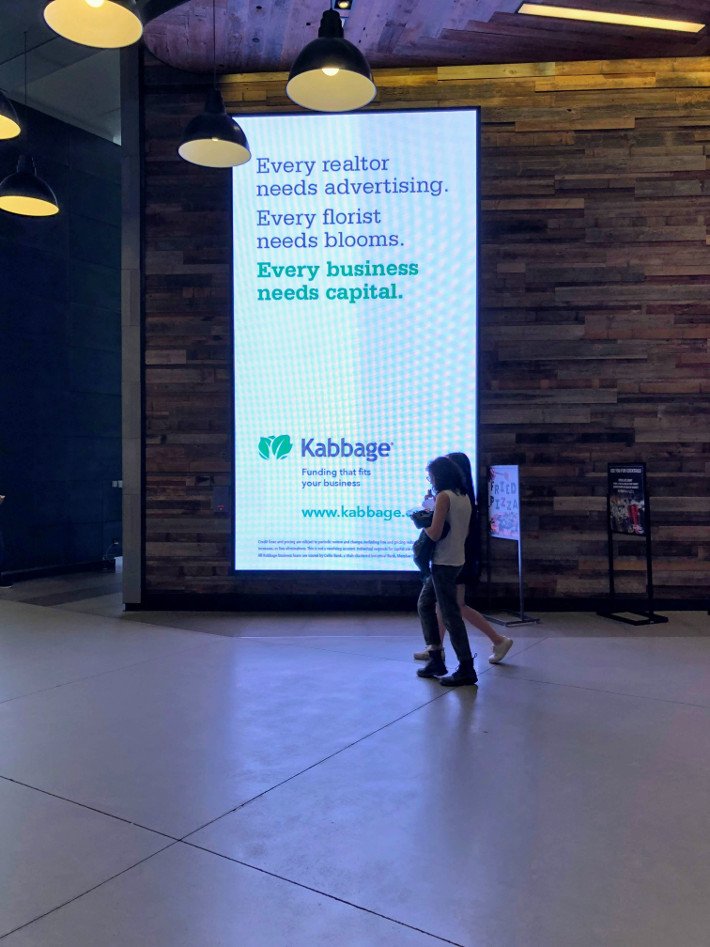
Undeterred by the sea of Square dashboards, billboard advertisements for Kabbage once blanketed the periphery. The ads, which few consumers seemed to gaze at, were clearly meant for the business owners in between the food court and the mall above it. There was also a competitive feel to it, as if Kabbage was subconsciously communicating to Square that they were not alone.
Nowhere to be found was OnDeck, an online lender headquartered a short distance away in Manhattan that does more in loan volume each year than Square and Kabbage. But just because they can’t be seen doesn’t mean they’re not there. Blending into the crowd of consumers, AltFinanceDaily spots business loan brokers, ones reputed to refer business to alternative capital sources and online lenders, OnDeck among them. 29% of OnDeck’s business in 2018 was attributed to Funding Advisors, an army of independent sales professionals across the country.
But they’re here for lunch just like everybody else, or are they? Their in-person presence may complicate their rivals’ efforts. Can a face and a handshake trump familiar software and the Internet? OnDeck’s $2.5 billion in 2018 loan volume suggests that their diverse sales strategy, including the use of Funding Advisors, has an impact.
Some vendors in DeKalb Market fail and go out of business. Others, like Cuzin’s Duzin, a homemade donut vendor made semi-famous by its feature on a Vice Media TV Show, The Hustle, recently completed renovations and further expanded its business into the nearby Barclay’s Center. Public records show the company just received financing from an equipment leasing company based in Washington State, a possible missed opportunity for the online lenders canvassing the space. Not for long, perhaps, as OnDeck announced it would be entering the equipment finance market this year.
As for Square, the love for the POS product presents a perceived edge. A general manager of Two Tablespoons, another food vendor, told AltFinanceDaily that he thinks the Square system they rely upon is very easy to use. He said it also creates promotions that allow businesses like them to track customer spending and text a customer (with their permission) if they’ve earned, say, $5 off at a store.
But converting these vendors into borrowers is not guaranteed. Kabbage’s ads could not be found on a recent trip to the food court. And one shop selling burgers there told AltFinanceDaily that they were aware of the loan product through Square because they use the POS for payments, but that they had no interest in using it to borrow money.
“It’s like a credit card,” she said. “What you take out, you owe. And we choose not to owe.”
Computers Continue to Fine Tune Underwriting
April 5, 2019 What’s the present role of computers in the underwriting process?
“It’s faster and more accurate,” CEO of Kapitus Andy Reiser said of the company’s new AI process. “We get thousands of pages a day of bank statements, and we can digitally read it through [our system] and then manipulate that data and analyze it.”
Co-founder of Clearbanc Michele Romanow said they don’t even have underwriters on staff. Instead, they have data scientists who work to improve their automated process.
CEO of Idea Financial Justin Leto said they have a robust AI model. It receives information like credit score, business type and details about other positions the company has; with that, it generates the term, rate and amount for a deal. But at Idea Financial, the human underwriters evaluate this information and make a decision.
“Human underwriting is still a critical part of funding,” Leto said. “There is an art to underwriting. It’s not just a science. It can’t be cookie cutter.”
Kapitus also employs underwriters. Despite continuing improvements to its AI system, Reiser acknowledged that there are always exceptions that require an underwriter, like if a merchant’s credit is extremely low. Also, underwriters generally get involved on deals for $150,000 or more, implying that more careful consideration by a human being has value, particularly when there’s more money at stake.
“There’s been a big uplift in the amount and quality of data available,” said Farrah Lakhani, Director of Growth and Operations for OakNorth Analytical Intelligence, which ultimately makes small business underwriting decisions mostly using AI.
“The more data you give [the AI machine], the better it learns…but you have to give the machine the right data.”
The right data, she explained, is similar enough data so that it can start to detect patterns and irregularities.
“All the data is useless if you’re not getting insights from it,” she said.
As for AI replacing human beings altogether, Lakhani doesn’t believe that will happen. She thinks we will always need human beings to think and reason.
“AI is replacing tasks, not people,” said Alex Jaimes, SVP of AI & Data Science at Dataminr at the Disruption Forum Fintech conference in New York this week. “So if all you do is tasks, then you might lose your job to AI.”
Online Lender Offering “Incredible” Returns to Investors is Recording Massive Losses
March 29, 2019 StreetShares continues to rack up astronomical losses, according to the company’s recently filed unaudited financial statements. The company recorded a $6.4 million loss for the second half of 2018 on only $1.88 million in operating revenue. As in previous periods, payroll continues to be the largest expense.
StreetShares’ funding comes in part from mom & pop investors that are offered a fixed annual return of 5% regardless of how the company’s underlying loans perform. Advertisements on the website call it “incredible” and trumpet that you can “grow your money like a 2x World War champ” and that “your balance will grow every day.” The offering is called a veteran business bond but it has no government backing and can suffer a total risk of loss, all while the underlying loans may not even be made to veteran-owned businesses.
A simple explanation on the site for how it works is that you just open an account, transfer funds from your bank and then just “watch the interest start piling up.” You can withdraw your money anytime but large withdrawals over $50,000 can take up to 30 days to process, the company states. The attractive terms have allowed StreetShares to take in millions of dollars from everyday people with amounts as small as $25.
Institutional investors can earn even higher returns. Lendit Co-founder Peter Renton recently called StreetShares his “top performing investment by a long way,” beating his investments in Lending Club, Prosper, P2Binvestor, Peerstreet, Yieldstreet, Money360, Fundrise, and even the returns previously and erroneously reported by Direct Lending Investments.
AltFinanceDaily previously reported that on January 1st, Jesse Cushman, the company’s Chief Business Officer and Principal Financial & Accounting Officer, resigned. However, his name continues to remain on the website’s Leadership page a full 3 months later. The company still has not named a permanent successor. AltFinanceDaily emailed StreetShares earlier in the week about Cushman’s departure and was told that he left to pursue another opportunity. “Steve Vickrey, has been in place since before he left,” President Mickey Konson responded. Konson has been filling in as acting Principal Accounting Officer in the meantime.
In a press release published by StreetShares on Tuesday about a new credit card offering, StreetShares CEO/co-Founder & Iraq War Veteran Mark L. Rockefeller, said, “Veterans love to help other veterans. StreetShares is a veteran-run company, and the goal of the card is not only to provide a veteran focused payments tool, but also to benefit the veteran community as a whole by funding programs that benefit veteran entrepreneurship.”
Yalber Announces $20 Million Credit Facility
March 26, 2019
Yalber announced today that they have obtained a new $20 million credit facility from Park Cities Asset Management. Brean Capital served as exclusive financial advisor to Yalber on the transaction. This follows an earlier $20 million credit facility in December 2018 from a different investment fund.
“The small business funding space has drastically changed in the past two years,” said Yalber CEO Amir Landsman. “We see more and more sophisticated players in the space and to me, it’s a sign that the industry is on the right track to be the major funding source of businesses in America. Being able to close two facilities within 15 months is strong evidence that Yalber has a lot to offer.”
Yalber provides American small businesses with royalty-based investments. They can fund small businesses with up to $500,000. Founded in 2007, the company is an early player in the alternative lending space and is unique in that it generates 90 percent of its business in-house. Less than 10 percent of their leads come from ISOs, although they do look to build relationships with high quality ISOs, according to Yalber COO Amotz Segal.
Segal said that, aside from business with ISOs, all of their marketing efforts are internal and span from social media to local advertising on radio, TV and in newspapers. Yalber does not use direct mail and does not pay for leads.
“It makes the job for our salespeople a little easier because they’re not making cold calls,” Segal told AltFinanceDaily. “We [mostly] get incoming calls.”
As of the beginning of last year, Yalber had funded more than 5,000 business with over $300 million, and Segal said that they had funded approximately $65 million in 2018. On the subject of regulation, Segal said that they remain very aware of regulatory changes and they don’t necessarily see regulations as a negative thing.
Headquartered in New York, Yalber employs about 25 people and has two very small offices in Dallas and Los Angeles.
Two Cultures Collided, Gently
March 25, 2019
Banks are heavily regulated. Factoring companies are not. The two don’t always mix. So it was interesting last July when Axiom Bank, a regional bank in Florida, acquired Allied Affiliated Funding, a factoring company based in Texas.
Fast forward nine months and the merger of the two companies has been surprisingly easy, according to Axiom CEO Daniel Davis.
“Banking and factoring are two different worlds, two different cultures,” Davis said. “[But] the challenges that we expected didn’t occur.”
Davis explained that the biggest challenge with a bank acquiring a factor is reconciling a bank’s credit risk with a factor’s, which are different because banks are more or less governed by regulatory standards while factors are not.
“Good factoring shops have guidelines too,” Davis said, “and we’re lucky to be involved with Allied which does share that high level of policies, procedures and internal controls.”
Regardless of how well a factor self-regulates, factoring companies have virtually no regulations compared to a bank, and this may give regulators a little pause to see a bank mixing with a factor.
“It is a challenge,” Davis said about merging a factoring company with a bank regarding regulations. “What the regulators want to see you do, whether you’re acquiring a factoring company or entering into a new product or service…what they’re most concerned with is that you’ve put the policies and procedures and risk management in place to actively manage and monitor that business.”
But so far, so good, according to Davis, who said that the factoring business has grown 30% in receivables since the July 2018 acquisition. Allied Affiliated Funding, which has retained its name, is now known as the factoring division of Axiom Bank. The bank has 24 branches throughout Florida, 22 of which are located inside Walmart stores. As far as marketing the relatively new factoring product, Davis said that while they do some brand marketing, the Allied factoring division gets most of its business from referrals, including attorneys and accountants.
He said that they also get referrals from banks. For instance, if a bank’s underwriting standards makes it such that it cannot keep a loan, the bank might send the loan to Axiom for it to be restructured as a factoring deal.
Undercover in the Underwriting Room
March 22, 2019 Think of the stereotype of a high energy, high testosterone sales floor of men practically shouting on the phone. And then scale it down to a level of about 2 out of 10. That was the environment I stepped into on a recent visit to a room of small business finance underwriters. They let me shadow one for a day so long as I didn’t reveal who they were.
In the glass room where almost 10 underwriters sat, some spoke on the phone, but the conversations were measured. No shouting. No arguing. Sometimes there was near silence. More than anything, there was an air of focus. After all, when you’re evaluating dozens of documents, just a single oversight can cost the company a lot of money.
“You don’t want to be the guy who loses the company money because you didn’t see a red flag,” said the underwriter.
He asked me to sit beside his desk and watch the funding decisions he was making based on what he saw in the file. He surely didn’t take the merchant’s monthly sales numbers at face value. For instance, in one file, in addition to subtracting a $2,000 transfer from the owner’s personal account into their business account, he also noticed a $4.18 refund from Walmart that was being counted as sales.
“That’s not sales,” he said, and he subtracted $4.18 from the monthly sales number. In one instance, $103,000 in reported sales became $75,000, according to the underwriter.
 While you could certainly feel the concentration in the room, it wasn’t quite a library either.
“His FICO sucks,” one of the underwriters said to the others. “His FICO went down and he’s stacked. No.”
When an underwriter is uncertain about a decision, he’ll ask for everyone’s two cents. He said they call these impromptu discussions the “underwriters’ den.”
All the deals we looked at got declined, but I’m told that one underwriter can fund as many as five deals in a day, and then go a few days without funding any.
While the underwriting criteria is taken seriously, sometimes you can be a little more aggressive and push the boundaries a bit if it’s a deal you really like. That takes considerable thought and reasoning. But when the answer is going to be no, it can come at light speed. A few of them happened in under three minutes while I was there. And that was with him slowing down to narrate for me what he was thinking.
“I give a look at [most of] the documents in the file first,” he said, “so that if there’s an obvious red flag, I don’t want to spend time on it.”
In his cursory glance, he’ll look at the business owner’s FICO score, years in business, if the company has other financing, and if so, how they’ve been able to handle those payments. He’ll also count the number of negative days (when the company owes money and has none) and note how consistently the company makes sales.
“Consistency gives me comfort,” he said. “I can give them a stronger offer when they show consistent sales.”
Of course, funding a file takes a good bit longer because you have to continue to vet the business and the business owner, almost as if you suspect there’s something wrong. Has the owner ever been convicted of fraud? Have they owned any other businesses? Did the owner ever default on a loan? It can seem hard for small businesses to pass all these background checks. But the funder has to protect itself and the underwriter’s job is to do just that.
“We’re in the business of giving out money, but within limits.”
Can a Merchant’s FICO Score Increase By the End of the Day?
March 16, 2019 Earlier this week, Alan Hayon had a challenge – to get a merchant above a 500 FICO score in order to make them eligible for small business funding. Within 30 minutes, Hayon increased the merchant’s personal FICO score by 59 points, getting them above 500. And the deal funded the following day. Hayon is the founder and CEO of The Credit Desk, a credit repair company in Long Island, and he used Experian Boost to get the merchant’s score up. It’s a brand new product from Experian that allows you to add and get credit for bills you have been paying on time, like gas, electricity, water, TV, internet and phone.
What used to take two to three weeks is now instantaneous with Experian Boost, according to Hayon. And the potential ramifications for small business funding are quite astounding. John Celifarco of Horizon Financial Group, a brokerage in New York, said that he had never heard of credit repair happening so quickly and that if it actually works, it could revolutionize the industry.
“Every deal could move up a grade,” Celifarco said. “This could have huge effects not just on the low end. You could jump someone from mid to high credit.”
Hayon conceded that it’s much harder to get a credit score up to, say 650, very quickly. That is harder and takes a little more time. Still, the new Experian Boost product means the ability to cross a FICO score minimum threshold and move a merchant from unfundable to fundable, almost immediately.
“It’s a positive domino effect,” Hayon said of Experian Boost, and what follows. “Then they can pay their credit card bills, get caught up with vendors and improve their credit further.”
This practice, often called “rapid rescoring,” has been used in the mortgage industry for years, according to Daniel Dias, owner of Small Business Lending Source, a brokerage in San Diego. Dias said that the rapid rescoring of a FICO score for someone applying for a mortgage can take as little as a day. Pretty fast. But for his clients, which are small businesses, he always tells them to wait at least 30 days to see an increase – from 20 to 60 points – in their score. By complete chance, when asked who he directs his clients to for credit repair, he said it was Hayon. Merchants pay Hayon directly, not via the broker.
In Celifarco’s experience, credit repair generally takes three to six months, which is usually too long for the merchant to wait to improve their FICO score. So he approaches credit repair a little differently. He advises his merchants to seek credit repair services after their first funding. This way, they can improve their credit and get a better rate the second time they go for funding.
Cory Petitte, who has worked both as a broker and a funder in South Florida, cautioned against inflating FICO scores in a way that misrepresents the merchant.
“I want to make sure the merchant can handle the payment,” he said.
He thinks that rapid rescoring is not a good practice and drew parallels to the 2008 mortgage crisis.
“You had mortgages that really weren’t A paper. [Instead,] they were B, C and D paper that were being represented as A paper.”
Furthermore, he said that he has spoken to underwriter who have told him they can sometimes tell when a FICO has been rapidly rescored.