Will Millennials Bring Non-banks into Their Finances?
April 1, 2019 Following Apple’s announcement last week of its upcoming Apple Credit Card, one question that comes to mind is: Will people, particularly millennials (now roughly 22 to 37 years old), be up for banking with non-bank companies?
According to an Accenture survey from five years ago, 34% of millennials said they would bank with Apple if such a product were available. Well, five years later, the product is available and Apple is now hoping to capture that demographic. According to the same survey, even more millennials at the time said they would be open to banking with Amazon or Google, and all with no physical branches.
Sankar Krishnan, Executive Vice President, Banking and Capital Markets, at Capgemini, a technology services and consulting company, said that convenience is most important to millennials.
“Millennials and Gen Y live their lives on smartphones… [and] daily comforts such as Uber, Starbucks, Amazon, Tinder and Netflix, are just a swipe away,” Krishan said in an interview in Forbes last year. “As a result, [they] have become accustomed to a quality digital customer experience where ease of use and inbuilt functionality are front and center.”
The implication is that any digital company with enough visibility and the ability to execute is fair game to enter the banking business. Why not Netflix? But Tinder?
Regardless, most major technology companies, like Amazon, Google, Facebook and Uber, are already in the payments space in one way or another. While potentially jarring at first, it seems that many millennials are ready to allow non-bank brands to become more a part of their finances.
Yet despite all the talk of how millennials are willing to break with convention, almost half of millennials said they would not consider switching to a bank that had no physical branches, according to a January 2019 survey conducted by eMarketer.com, which creates marketing reports.
“Though [millennials] may use branches less than older consumers, they don’t want to forgo the option of going to a physical location,” said eMarketer principal analyst Mark Dolliver. “The step from ‘digital’ to ‘digital-only’ is a big one, and many millennials will be in no hurry to take it.”
Square Renews Effort to Become a Bank
December 19, 2018 Square has plans to refile paperwork with state and federal regulators to open a wholly owned bank in Utah, according to a report in The Wall Street Journal today. In 2017, the company applied with the Federal Deposit Insurance Corp (FDIC) for a licence to become an Industrial Loan Company (ILC) bank, but it withdrew the application at the beginning of July 2018.
An ILC bank can take deposits and can be owned by a non-bank. It is also exempt from certain regulations that traditional banks must follow, making the ILC bank structure highly controversial. Critics say that ILC banks are very risky because they can engage in commercial activity outside of banking, which could lose money and jeopardize the bank.
“ILC banks were meant to serve a certain type of industrial worker [in the early 1900s] that had trouble finding a commercial bank they could bank with,” said Chris Cole, Senior Regulatory Counsel at Independent Community Bankers of America (ICBA), a trade group.
“Now we don’t have that problem anymore…this [ILC bank] charter is completely outdated [and is] a loophole that should be closed so that the owners of these bank-like institutions are restricted in the same way that commercial banks are restricted,” he said.
Proponents of ILC banks, like the fintechs that seek ILC status, say that becoming a bank can better serve their customers. Under the 2010 Dodd-Frank Act, which came in response to the Great Recession, there was a moratorium on establishing ILC banks because they were deemed to be a risk to the U.S. banking system. That moratorium was lifted in 2013 and over the last several years, a handful of fintechs have applied to get an ILC bank charter license.
SoFi applied for a license and later withdrew its application in 2017 amid a scandal related to its former CEO. But its current CEO, Anthony Noto, mentioned the possibility of pursuing ILC status again at the Money 20/20 conference in October.
NelNet, which services student loans, applied for an ILC license in June of this year and later withdrew its application in October.
THE ABCs OF SBDCs
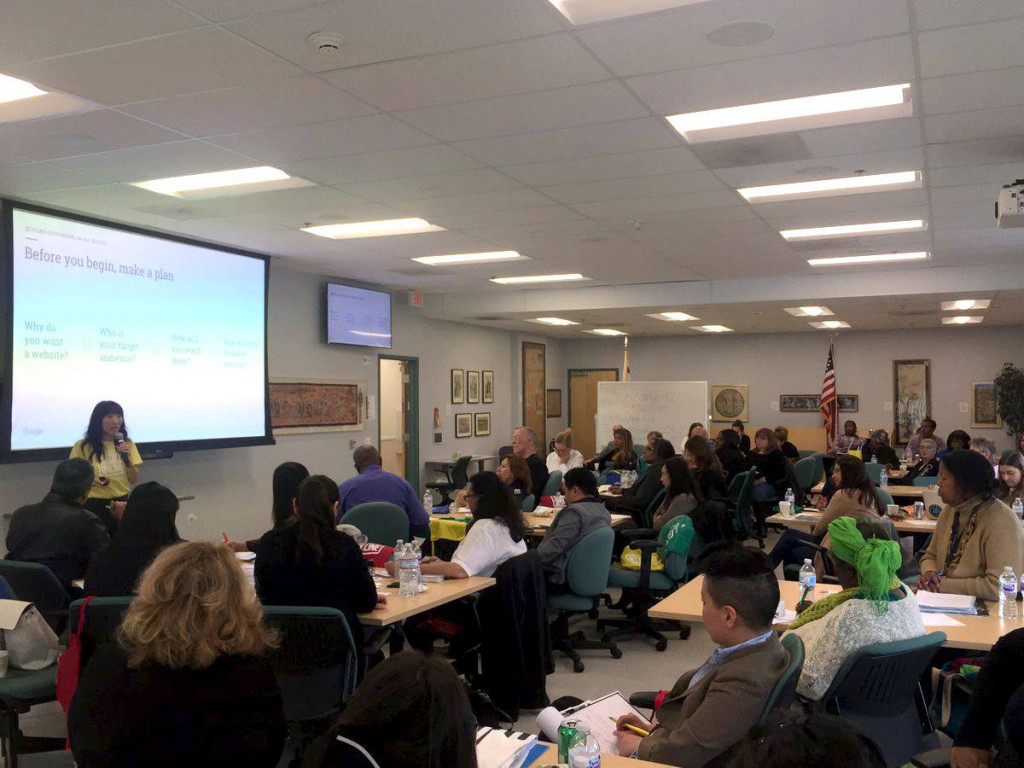
December 16, 2018 An often-overlooked national network of nearly a thousand Small Business Development Centers has the potential to help alternative funders cement relationships with existing clients and locate new ones. The centers, known as SBDCs, offer free or low-cost training and consultation to established and aspiring merchants and manufacturers.
The earliest SBDCs have been around for four decades. The centers operate in conjunction with the Small Business Administration as public-private partnerships and serve about 1.5 million clients annually.
Centers help small-business owners evaluate ideas, organize companies, find legal assistance and obtain operating capital.
But not everyone knows all that. “The network is underutilized,” says Donna Ettenson, vice president of operations for Washington-based America’s SBDCs, which functions much like a trade association for the centers scattered across the nation. “We’re one of the best-kept secrets in the United States federal government.”
That means alternative funders can assist customers by simply informing them that the centers exist and can offer potentially beneficial services. Providing basic information on the SBDCs could become part of a consultative approach to selling that brings repeat business, especially with merchants who lack business skills or experience, observers suggest.
What’s more, alt funders who want to increase their chances of benefitting from SBDCs can go beyond merely providing clients with a rundown on the centers. The funders can become actively involved with the work of carried out at the centers.
One way of taking part is to contact nearby centers and offer to make presentations at seminars or workshops, Ettenson says. Funders could provide information to fledgling business owners on the instruments available through the alternative-funding industry, such as cash advances, loans and factoring, she suggests.
 To get started, alternative funders can visit the America’s SBDC website, where they’ll find a search tool that provides contact information for their nearest centers, Ettenson says. From there, they could discuss possible connections with officials at the local centers, she advises.
That involvement would not only provide exposure to merchants in need of capital but also to center officials who point merchants toward capital sources. If enough members of the alt funding industry took part, their work could eventually give rise to something akin to the lists of attorneys that some centers maintain, Ettenson says.
Centers often tap attorneys—perhaps quarterly—to lecture on a rotating basis on what type of business to form. That could mean organizing as a corporation, limited-liability partnership or some other form. In much the same way, funders could share their knowledge of instruments for obtaining capital.
Funders could emulate the lawyers who use the centers as a forum for soft marketing, Ettenson says. The speaker becomes a familiar face and can leave business cards that students could use to contact them as questions arise. However, speakers must provide general information and are prohibited from using speaking opportunities as blatantly self-promotional unpaid advertisements, she cautions.
What’s more, the centers have to exercise caution to avoid recommending specific attorneys, accountants or sources of capital because they could incur liability if events go sour and a service provider absconds to Bogata, Columbia, Ettenson points out. That keeps the centers “ecumenical,” in that they provide a list of professionals for clients to interview and rather than pointing to a single source.
Alternative funders can explore other ways to become involved with SBDCs, too. The national organization presents an annual trade show and professional development conference for service-center directors and service-center staff members who teach or consult with clients. Alternative funders who have taken booth space on the exhibition floor or made presentations in the accompanying conference include RapidAdvance, Breakout Capital, Kabbage and Newtek Business Services.
When America’s SBDCs issues a call for presentations at the annual conference, it receives approximately 300 applications for about 140 speaking slots. Some of the speakers come from the rosters of presenters at past shows, while companies newer to the trade show can purchase an entry-level sponsorship that includes booth space and the right to conduct a workshop.
The attendees at those annual conferences can tell their clients about the funders they encounter there. Attendees can also find out more about the alternative- funding industry and then pass that information along to merchants.
Some regional centers in states with large populations—such as California—can also hold conventions for their officials, says Patrick Nye, executive director for small business and entrepreneurship at the Los Angeles Regional SBDC Network, which is based at Long Beach City College. His state was planning its second statewide gathering this year and intends to do it again every other year. Alternative funders could participate, he says.
With so much going on at the centers, someone has to front the cash to keep the lights on. Local organizations are funded partly through federal appropriations administered by the SBA. “In order for the federal money to be pulled down, a matching non-federal dollar must be provided as well,” Ettenson says. The federal funds are apportioned based on the amount of matching funds the centers provide.
The matching funds usually flow from colleges, universities and state legislatures. “It’s a mix,” Ettenson says of the sources. Institutions of higher learning often meet part of their matching-fund goals by providing “in kind” resources—such as classrooms, services and instructors—instead of cash.
In the six states that administer the centers through their economic development departments, the state legislatures generally appropriate matching funds. In Texas, the representatives of the state’s four regional programs combine forces to lobby the legislature for matching funds, and that teamwork reduces the cost of their efforts in Austin.
The federal funds and matching funds support local and regional centers that belong to a network based on 62 host institutions. Of the 62, six operate through the economic development departments of state governments. They’re in Indiana, Illinois, Ohio, West Virginia, Minnesota and Colorado. The rest of the host institutions are mostly universities or community colleges. Some are based in economic development agencies.
One can think of the regional centers as something akin to corporate headquarters and the local centers as retailers, says Nye, who administers the Southern California regional center. The local centers under his regional’s jurisdiction are located in only three counties but pull in the sixth-largest share of funding because of Southern California’s huge population, he notes.
The local service centers provide training and consulting for entrepreneurs starting or expanding their enterprises. About 60 percent of the clients are already in business. Of the 40 percent who don’t own a business, about half launch one after receiving assistance from an SBDC, Ettenson says.
The centers don’t charge for consulting services, and the fees for training are just large enough to cover expenses. The training fees usually remain in the centers that provide the instruction where they’re used to cover expenses like buying computers.
In Southern California centers, the business advisors are usually under contract and have knowledge to share from their experience in business, marketing, banking, social media, consulting or other realms, says Nye. Not many college instructors work in the centers, he notes, adding that the centers are monitored to avoid conflicts of interest among advisors.
To track how well advisors are performing, the national organization produces economic impact statements by interviewing thousands of clients. Interviews generally take place two years after consulting sessions. That should provide enough time to get results, Ettenson says
Thus, America’s SBDCs this year surveyed clients who received services in 2016. Those long-term clients received $4.6 billion in financing, while last year the clients surveyed who got underway in 2015 had received $5.6 billion in financing. She could not break down that financing by categories like banks and non-banks.
Discussing those surveys, Ettenson offers some details. “If you talk to us for two minutes, we don’t consider you a client,” she emphasizes. The SBDC definition of what constitutes a client calls for at least one hour of one-to-one consulting or at least one two- hour training session, she says. The organization defines “touches” as people with less exposure, such as those who call on the phone with a question.
When an SBDC client needs funding, officials at the centers have no qualms about including alternative funders in their recommendations to clients who are seeking funds, says Ettenson. “We don’t exclude anybody in any way, shape or form unless there’s some reason to think they’re fraudulent,” she notes.
But malfeasance isn’t the worry it once was, Ettenson asserts, noting that alternative funders have gained credibility in the last five or so years as they began policing their own industry. “They’ve learned to keep track of who’s in their space and how they’re operating,” she says.
Alternative financing has established a niche that benefits small-business people who know how to use it, Ettenson maintains. “They understand that they’re borrowing money for a short period of time and it’s going to cost you a fair amount,” she says. “It’s a short-term bridge to get to whatever your goal is.” Merchants seeking funders should learn the differences among alternative funders—whom she says all operate a little differently from each other—to choose their best option.
And opportunity for alternative funders may abound at the centers in the near future. Nye cites the two biggest goals for his centers as new business starts and capital infusion. Center advisors help develop business plans that aid clients in obtaining financing, he says. Last year, his region received a little over $4 million from the SBA and used it to help start 365 new businesses and raise $148 million in capital infusions. Those efforts created 1,700 jobs, he says.
Signature Bank Partners with trueDigital
December 4, 2018 Today, Signature Bank unveiled a proprietary digital payments platform for its commercial clients, according to a statement released by the bank. The platform, called Signet, is designed to allow Signature Bank’s commercial clients to make real-time payments in U.S. dollars, every hour of the year.
“The ability to transmit funds between approved, fully vetted commercial clients of the bank at all times is very valuable, especially in light of the increasing speed and frequency at which they conduct their business,” said Joseph J. DePaolo, President and Chief Executive Officer at Signature Bank. “Signature Bank has made a commitment to invest in its technology infrastructure, and the Signet Platform is indicative of this investment,”
This commitment by a bank to embrace technology is consistent with other banks of late. Chase and PNC have partnered with OnDeck’s ODX to streamline their online lending processes and other banks have partnered with fintechs recently as well.
“The partnership between trueDigital and Signature Bank will quickly prove to be extremely beneficial and revolutionary for clients globally as they will now be afforded the opportunity to make instantaneous USD payments to one another in real-time at no cost per transaction,” said Sunil Hirani, Founder of trueDigital.
The new Signet platform uses blockchain technology and can be used to make payments across a wide variety of industries, initially focusing on power, shipping, real estate, auto and digital assets where costs, delays, operational risks and counter-party risks are significant, according to a trueDigital statement.
The platform is not designed for a very small company as transactions made on the Signet platform require a minimum account balance of $250,000. Also, the companies exchanging money must both have an account at Signature Bank.
The New York State Department of Financial Services has approved the Signet platform and deposits held on the platform are eligible for FDIC insurance, up to the legal insurable amounts defined by the FDIC.
Signature Bank is a New York-based full-service commercial bank with 30 private client offices throughout the New York metropolitan area. This year, the bank opened a full-service private client banking office in San Francisco. Signature Bank’s specialty finance subsidiary, Signature Financial, LLC, provides equipment finance and leasing. trueDigital is a New York-based fintech company that provides solutions to financial markets by utilizing blockchain-based technologies.
Patriot Bank Expands SBA Lending
November 28, 2018 Connecticut-based Patriot Bank announced today the overall expansion of its small business lending operation. At the beginning of the month, it added to it board of directors Brent Ciurlino, a former SBA official who served as Director of the Office of Credit Risk Management for the SBA. There, he supervised the $105 billion SBA 7(a) and 504 loan debenture and portfolio programs.
“As a banking executive and former federal regulator overseeing small business loan programs, Brent brings substantial expertise and value that will benefit Patriot Bank, its customers and its shareholders,” said Michael Carrazza, chairman and CEO of the bank. “As we build our small-business lending portfolio and look ahead to the goals we have set, Brent’s active involvement will bring a heightened dimension of operational, regulatory and risk management oversight.”
Patriot Bank became an approved SBA lender at the end of 2017, obtained “preferred lender” status with the SBA in September, and is currently opening SBA Business Development offices in the southeast, according to a story on the bank’s website. Additionally, according to the story, the bank signed a definitive purchase agreement in February of this year with Hana Small Business Lending Inc. for its $490 million SBA portfolio. Carrazza said at the time that this would help the bank become one of the country’s leading SBA 7(a) lenders.
Patriot Bank’s Director of SBA Lending Kevin Ferryman, himself a new hire this year, said that the bank’s goal is to enhance its traditional lending programs.
“We’re in a position now where we can approve loans for a lot more customers than we could do with our own internal policies,” he said.
Ferryman also acknowledged that having “preferred lender” status with the SBA allows the bank to process, close and service most SBA-guaranteed loans without prior SBA review.
“As a result, entrepreneurs and small community businesses can obtain their loans more quickly and efficiently,” Ferryman said.
Founded in 1994, Patriot Bank is a consumer and commercial bank with branches in affluent communities in Connecticut and one in Scarsdale, NY.
As Implementation of FICO’s UltraFICO Approaches, Upstart Says The Value is There
November 5, 2018The rise of fintech has already rocked the banking and traditional lending industry and now it’s disrupting FICO, the traditional credit scoring method that’s been in place since the mid-1900s.
FICO, which is the credit scoring system created by Fair Isaac Corp, is getting a makeover. The UltraFICO Score, which is scheduled to launch in early 2019, will pull from a consumer’s checking, savings and money-market accounts and add the data to their credit profile. It creates a broader credit picture, one that is designed to lead to more lending approvals than the static formula provides, as long as a consumer manages their cash well. Reports suggest the FICO score could jump by 20 points or more for millions of borrowers.
Meanwhile, fintech startup Upstart has been in the consumer lending business for the past five years. Upstart takes a two-pronged approaching, using more variables and more machine-learning algorithms than the traditional credit-scoring method.
“Using a variety of machine learning algorithms lets you pick up new insights from data,” said Upstart Co-Founder Paul Gu.
The company’s approach has influenced banks that frequently approach Upstart, a couple of which have become partners that are using a fully branded version of Upstart.com.

It’s not surprising considering Upstart is experiencing a lower loss rate versus its banking competitors. Upstart’s Gu explained the average lender issuing a personal loan to someone with a FICO score in the 660 range will typically experience a loss rate of 14%. Upstart’s loss rate is half that.
“That same 660-type borrower in our portfolio has an annual loss rate of 7%. That’s a pretty staggering difference and translates into benefits for our borrowers,” Gu told AltFinanceDaily, adding that if the company can cut the loss rate, they can, in turn, lower the interest rate. Certainly, non-fintech lenders are paying attention.
“I don’t want to claim credit for anything FICO is thinking about. But I do think we are showing the industry at large that there is a huge amount of opportunity out there, and that you can go after it with technology that is available today. The potential benefits for consumers and your business are enormous,” Gu said.
Upstart’s early focus was on younger consumers with no real credit history but with an education history, which Gu said has yielded great success for the company. Since then they’ve expanded to pursue other groups of people who have similarly been “lost in the cracks” of the traditional credit scoring system, including certain occupations.
Gu explained that while lenders typically examine a potential borrower’s income level and their debt-to-income ratio, there’s more to it than that. Upstart most recently has created a way to include data based a potential borrower’s occupation, which he points out is tricky to quantify.
“Occupations are combinations of words that are hard to group in a useful way for the purposes of data analysis,” said Gu. Nonetheless, Upstart and its team of nearly a dozen data scientists have poured research into employers and occupations to create a classification system and determine how to turn words into numbers to use in their machine learning model.
“It’s not shocking that some professions are more highly correlated with repayment than others. Nurses, for example, are very reliable in paying back their loans,” Gu explained.
Upstart, which has issued consumer loans to fewer than 300,000 borrowers, has made it their mission to constantly improve upon their models to find cracks. “Our best estimate suggests we’ve solved only 8% of the total opportunity so far,” he said.
Low-Hanging Fruit
It’s early days for FICO’s new credit scoring system, but according to reports lenders have already begun to show an interest. Experian has reportedly partnered with fintech startup Finicity to publish the broader credit profile to banks. But the increased competition doesn’t seem to bother Upstart.
“I think there are starting to be efforts made by other players in the space to do some of the things we’re doing. Some of the lower hanging fruit we were uncompeted for earlier might have a little bit of competition. That said, the thing people don’t realize is how much room for improvement is still left,” Gu said.
As for FICO, their new feature is a side-product to the traditional credit-scoring system, not a replacement, which could impact the pace of adoption and innovation. “This kind of technology investment should take 95% of their attention, not 5%,” said Gu.
Is Your Firm Ready for Machine Learning?
October 15, 2018Artificial intelligence such as machine learning has the potential to dramatically shift the alternative lending and funding landscape. But humans still have a lot to learn about this budding field.
Across the industry, firms are at different points in terms of machine learning adoption. Some firms have begun to implement machine learning within underwriting in an attempt to curb fraud, get more complex insights into risk, make sounder funding decisions and achieve lower loss rates. Others are still in the R&D and planning stage, quietly laying the groundwork for future implementation across multiple areas of their business, including fraud prevention, underwriting, lead generation and collections.
“It’s entirely critical to the success of our business,” says Paul Gu, co-founder and head of product at Upstart, a consumer lending platform that uses machine learning extensively in its operations. “Done right, it completely changes the possibilities in terms of how accurate underwriting and verification are,” he says.
While there’s no absolute right way to implement machine learning within a lender’s or funder’s business, there are many data-related, regulatory and business-specific factors to consider. Because things can go very wrong from a business or regulatory perspective—or both—if machine learning is not implemented properly, firms need to be especially careful. Here are a few pointers that can help lead to a successful machine learning implementation:

Using machine learning, funders can predict better the likelihood of default versus a rule-based model that looks at factors such as the size of the business, the size of the loan and how old the business is, for example, says Eden Amirav, co-founder and chief executive of Lending Express, a firm that relies heavily on AI to match borrowers and funders.
Machine learning takes hundreds and hundreds of parameters into account which you would never look at with a rule-based model and searches for connections. “You can find much more complex insights using these multiple data points. It’s not something a person can do,” Amirav says.
He contends that machine learning will optimize the number of small businesses that will have access to funding because it allows funders to be more precise in their risk analyses. This will open doors for some merchants who were previously turned down based on less precise models, he predicts. To help in this effort, Lending Express recently launched a new dashboard that uses AI-driven technology to help convert business loan candidates that have been previously turned down into viable applicants. The new LendingScore™ algorithm gives businesses detailed information about how they can improve different funding factors to help them unlock new funding opportunities, Amirav says.
Lenders and funders always have to be thinking about what’s next when it comes to artificial intelligence, even if they aren’t quite ready to implement it. While using machine learning for underwriting is currently the primary focus for many firms, there are many other possible use cases for the alternative lenders and funders, according to industry participants.
Lead generation and renewals are two areas that are ripe for machine learning technology, according to Paul Sitruk, chief risk officer and chief technology officer at 6th Avenue Capital, a small business funder. He predicts that it is only a matter of time before firms are using machine learning in these areas and others. “It can be applied to several areas within our existing processes,” he says.
Collection is another area where machine learning could make the process more efficient for firms. Machines can work out, based on real-life patterns, which types of customers might benefit from call reminders and which will be a waste of time for lenders, says Sandeep Bhandari, chief strategy and chief risk officer at Affirm, which uses advanced analytics to make credit decisions.
“There are different business problems that can be solved through machine learning. Lenders sometimes get too fixated on just the approve/decline problem,” he says.
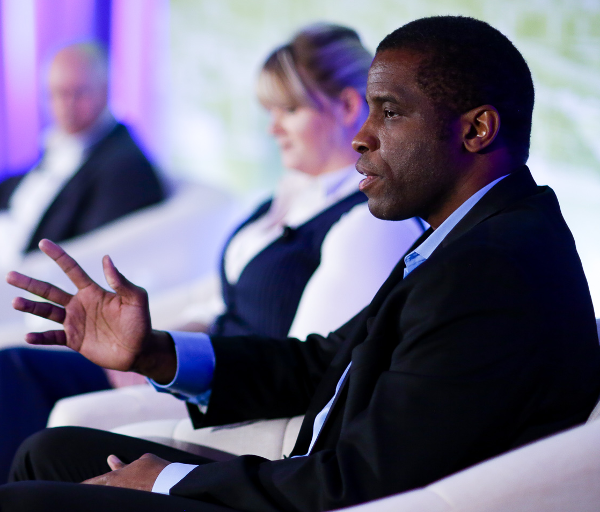
“Most underwriters don’t have enough data to effectively incorporate AI, deep learning, or machine learning tools,” says Taariq Lewis, chief executive of Aquila, a small business funder. He notes that effective research comes from the use of very large datasets that won’t fit in an excel spreadsheet for testing various hypotheses.
Problems, however, can occur when there’s too much complexity in the models and the results become too hard to understand in actionable business terms. For example, firms may use models that analyze seasonal lender performance without understanding the input assumptions, like weather impact, on certain geographies. This may lead to final results that do not make sense or are unexpected, he says.
“There’s a lot of noise in the data. There are spurious correlations. They make meaningful conclusions hard to get and hard to use,” he says.
The more precise firms can be with the data, the more predictive a machine learning model can be, says Bhandari of Affirm. So, for example, instead of looking at credit utilization ratios generally, the model might be more predictive if it includes the utilization rate over recent months in conjunction with debt balance. It’s critical to include as targeted and complete data as possible. “That’s where some of our competitive advantages come in,” Bhandari says.
Underwriters also have to pay particularly close attention that overfitting doesn’t occur. This happens when machines can perfectly predict data in your data set, but they don’t necessarily reflect real world patterns, says Gu of Upstart.
Keeping close tabs on the computer-driven models over time is also important. The model isn’t going to perform the same all along because the competitive environment changes, as do consumer preferences and behaviors. “You have to monitor what’s going well and what’s not going well all the time,” Bhandari says.
Certainly, as AI is integrated into financial services, state and federal regulators that oversee financial services are taking more of an interest. As such, firms dabbling with new technology have to be very careful that any models they are using don’t run afoul of federal Fair Lending Laws or state regulations.
“If you don’t address it early and you have a model that’s treating customers unfairly or differently, it could result in serious consequences,” says Tim Wieher, chief compliance officer and general counsel of CAN Capital, which is in the early stages of determining how to use AI within its business.
 “AI will be transformative for the financial services industry,” he predicts, but says that doing it right takes significant advance planning. For instance, Wieher says it’s very important for firms to involve legal and compliance teams early in the process to review potential models, understand how the technology will impact the lending or funding process and identify the challenges and mitigate the risk.
To be sure, regulation around AI is still a very gray area since the technology is so new and it’s constantly evolving. Banking regulators in particular have been looking closely at the issues pertaining to AI such as its possible applications, short-comings, challenges and supervision. Because the waters are so untested, there can be validity in asking for regulatory and compliance advice before moving ahead full steam, some industry watchers say.
Upstart, for example, which uses AI extensively to price credit and automate the borrowing process, wanted buy-in from the Consumer Financial Protection Bureau to help ease the concern of its backers as well as to satisfy its own concerns about the legality of its efforts. So the firm submitted a no-action request to CFPB. The CFPB responded by issuing a no-action letter to Upstart in September 2017, allowing the company to use its model. In return, Upstart shares certain information with the CFPB regarding the loan applications it receives, how it decides which loans to approve, and how it will mitigate risk to consumers, as well as information on how its model expands access to credit for traditionally underserved populations.
The No-Action Letter is in force for three years and Upstart can seek to renew it if it chooses.

Theoretically firms could have a computer underwriting model constantly updating itself without having a human oversee what the model is doing—but it’s a bad idea, industry participants say. “I believe there are companies doing that, and it’s a risky thing to do,” says Scott M. Pearson, a partner with the law firm Ballard Spahr LLP in Los Angeles.
During review of the models—and before implementing them—people should carefully review the models and the output to make sure there’s nothing that causes intrinsic bias, says Kathryn Petralia, co-founder and president of Kabbage, which is one of the front-runners in using machine learning models to understand and predict business performance.
“If you’re not watching the machine, you don’t know how the machine is complying with regulatory requirements,” she says.
Kabbage has teams of data scientists regularly developing models that the company then reviews internally before deploying. The company is also in frequent contact with regulators about its processes. Petralia says it’s very important that firms be able to explain to regulators how their models work. “Machines aren’t very good at explaining things,” she quips.
As a best practice, Pearson of Ballard Spahr says lenders and funders shouldn’t use any machine learning model until it’s been signed off on by compliance. “That strikes a pretty good balance between getting the benefits of AI and making sure it doesn’t create a compliance problem for you,” he says.
While AI has many benefits, industry participants say alternative lenders and funders need to be mindful of how it can be applied practically and effectively within their particular business model.
Craig Focardi, senior analyst with consulting firm Celent in San Francisco, contends that the classic FICO score continues to be the gold standard for credit decisions in the U.S. He warns firms not to get overly distracted trying to find the next best thing.
“Many fintech lenders have immature risk management and operations functions. They’re better off improving those than dabbling in alternative scoring,” he says, noting that data modeling is an entirely separate core competency.
Indeed, Lewis of Aquila cautions underwriters not to view AI as a silver bullet. “AI is just one tool out of many in the lenders’ toolbox, and our industry should use it and respect its limitations,” he says.
Varo Money Chief Eyes Next Year for Bank Launch
September 10, 2018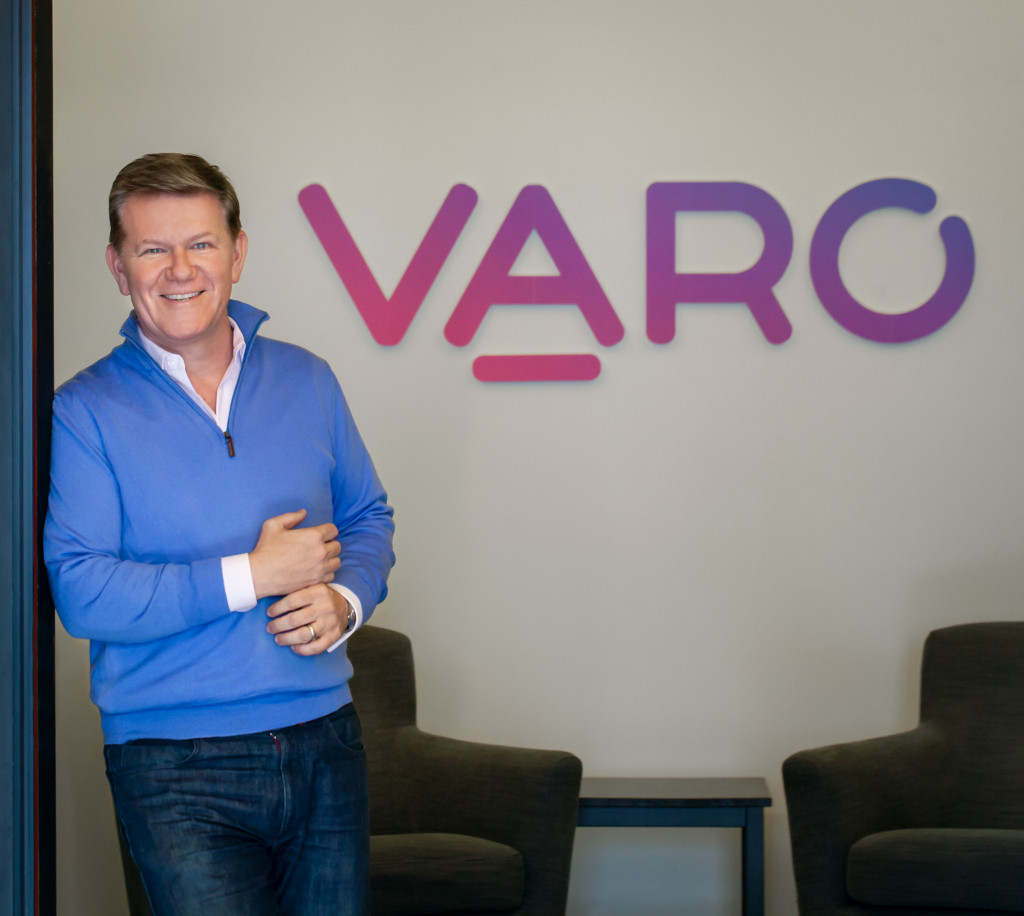 San Francisco-based Varo Money just cleared a major hurdle in its pursuit to become a bank. Varo Bank N.A. received the preliminary green light from the Office of the Comptroller of the Currency (OCC) to form a de novo national bank. It brings Varo one step closer to becoming the maiden all-mobile national bank in the United States. It’s an exciting development for a fintech play, one that Varo CEO Colin Walsh calls a “game changer.”
“That the OCC is willing to move ahead with the application is very different from what they’ve done before. It marks the beginning of a whole new era in consumer banking,” Walsh told AltFinanceDaily.
Indeed, the OCC has only issued two national bank approvals in nearly the past decade, the last one of which was a traditional branch-based bank. Varo, meanwhile, is anything but traditional, boasting a mobile, cloud and API-based offering.
“What stands out about the Varo team is we are very experienced and seasoned in banking and consumer technologies. We’ve spent most of our professional lives in the industry. It’s not like we’re trying to figure it out and learning on the job,” Walsh explained. As a result, when regulators peppered Varo with questions and scenarios, the team already knew how banking works.
Now that Varo has the regulatory wind at its back, there’s no time like the present, and Walsh is the first to admit he’s got an “aggressive timeline.”
“Our plan is to open the bank within the next year … The pieces are falling into place now,” he said, pointing to lots of dialogue unfolding with the FDIC for deposit insurance and other components required to build a core banking system. One of the items at the top of the agenda is for Varo to separate from its sponsor bank, The Bancorp Bank, to become its own independent bank, something the fintech has been transaparent about since day one when it was founded in 2015.
Competitive Landscape
Walsh described a competitive landscape of the massive $1.4 trillion banking market of which there are $750 billion of consumer deposits. It’s divided evenly, he explained, between nine major banks and 5,600 smaller banks. The nine banks continue to invest billions into new products and chasing customers. The long tail of smaller banks, meanwhile, “try to do the right thing, but many are sub-scale. They don’t have the technological advantages that some of the new players have,” Walsh said. Varo competes with all of them.
“We compete with the big guys, we compete with the long tail, we compete with fintechs. But with such a big market that has so many issues, it’s ripe for disruption,” said Walsh.