
Canadian Lenders Summit Recap
November 23, 2019 The Canadian Lenders Association’s largest annual event brought together hundreds of executives from the fintech and lending industries. It was hosted at MaRS, a dedicated launchpad for startups in Downtown Toronto that occupies more than 1.5 million square feet and is home to more than 120 tenants, many of which are global tech companies.
After OnDeck Canada CEO Neil Wechsler was introduced as the new chairman of the association, the day kicked off with a presentation by Craig Alexander, the Chief Economist of Deloitte Canada. Alexander explained that after some major warning signs sounded off late last year and early this year, Canadian growth and positive economic indicators have returned. He opined that politics in Canada and the United States will play a strong role in the economic outcomes of both countries going forward.
Panels on a variety of topics dominated the rest of the day with an interlude keynote from author Alex Tapscott who spoke about the financial services revolution.
The sessions concluded with an award ceremony focused around the Top 25 Company Leaders in Lending and the Top 25 Executive Leaders in Lending. The Canadian Lenders Association will make videos of the sessions available online. AltFinanceDaily was in attendance.

Apple Card Under Investigation by State Financial Regulator
November 14, 2019 Apple and Goldman Sachs came under fire this week after numerous users of the Apple Card, a joint venture by the two companies, took to social media claiming that the algorithm used to determine credit limits discriminated against women.
It began when Danish tech entrepreneur and racecar driver David Heinemeier Hansson wrote up an expletive-laden teardown of the card and the companies behind it after he discovered that he had access to twenty times more credit than his wife, despite the couple having filed joint tax returns. Following the twitter thread’s viral surge, other men came forward with similar stories, some noting that their wives had better credit scores than themselves.
Upon dealing with Apple’s customer service, who gave Hansson’s wife a “VIP bump” to her credit limit, raising it to match her husband’s, the entrepreneur lamented the giant’s response to his questions about the decision-making process behind Apple Card.
“Apple has handed the customer experience and their reputation as an inclusive organization over to a biased, sexist algorithm it does not understand, cannot reason with, and is unable to control,” Hansson wrote after being told by two Apple representatives that they were unable to explain the reasoning behind the inequity other than say that “it was just the algorithm.” Hansson went on later to criticize the implementations of algorithms that incorporate “biased historical training data, faulty but uncorrectable inputs, programming errors, or malicious intent” as a whole, pointing to Amazon’s recent use of an algorithmic hiring tool that taught itself to favor men.
And in a surprise twist, Apple Co-founder Steve Wozniak weighed in, saying, “The same thing happened to us. I got 10x the credit limit. We have no separate bank or credit card accounts or any separate assets. Hard to get to a human for a correction though. It’s big tech in 2019.”
Over the weekend word came from the New York Department of Financial Services that it would be investigating the practices behind the Apple Card to determine whether or not such an algorithm discriminates on the basis of sex, which is prohibited by state law in New York. This is the second such investigation recently, with the NYDFS announcing last week an investigation into the healthcare company UnitedHealth Group and its use of an algorithm that allegedly led to white patients receiving better care than black patients.
“Financial service companies are responsible for ensuring the algorithms they use do not even unintentionally discriminate against protected groups,” wrote NYDFS Superintendent Linda Lacewell in a blog post that explained the decision to investigate and called for those who believed they were affected unfairly by Apple Card to reach out. “[T]his is not just about looking into one algorithm – DFS wants to work with the tech community to make sure consumers nationwide can have confidence that the algorithms that increasingly impact their ability to access financial services do not discriminate and instead treat all individuals equally and fairly no matter their sex, color of skin, or sexual orientation.”
In their response, the Goldman Sachs Bank Support twitter account posted a note listing various factors that come into consideration when determining a person’s credit limit, asserting that they “have not and will not make decisions based on factors like gender.”
And it would appear that this is correct, at least in the literal sense, as the application process for the Apple Card does not include any questions relating to gender.
Bruce Updin of Zest AI, a company that provides machine learning software for underwriters, said of the controversy that “there’s bias in all lending models, even human lenders … race, gender, and age are built into the system. It can show up just due to the nature of the credit scoring system as FICO scores at the end of the scale can correlate to race.”
Explaining that there are connections between identity and information many humans might never perceive without machine-learning algorithms, like Nevada license plates being an indicator of the likelihood of someone’s race, Updin asserts that such links need to be weighed, balanced, and supervised by those in the banks. For Updin, transparency and explainability are the real problems here rather than the algorithms themselves.
Software exists that can pinpoint which variables are producing results that, for example, skew to prefer women over men, and can remove such factors and run the tests again, probing for differences. The trouble arises when banks find themselves unable to communicate such details for whatever reason, be it an inherent misunderstanding of their own programs or an unwillingness to explain why some of their models prefer certain groups over others.
It’s really a case of “giving up a little bit of accuracy for a lot of fairness” when choosing to remove variables that are proxies for gender, race, age, or a variety of other identifying features, according to Updin. “It’s just a lot of math, it’s not magic. The more you automate the tools, the easier it is.
“I’m convinced in 5-10 years every bank will be using machine-learning for underwriting … we don’t need to throw out the baby with the bathwater.”
Jamie Dimon Among 181 CEOs Pledging to Look Beyond Investors
August 22, 2019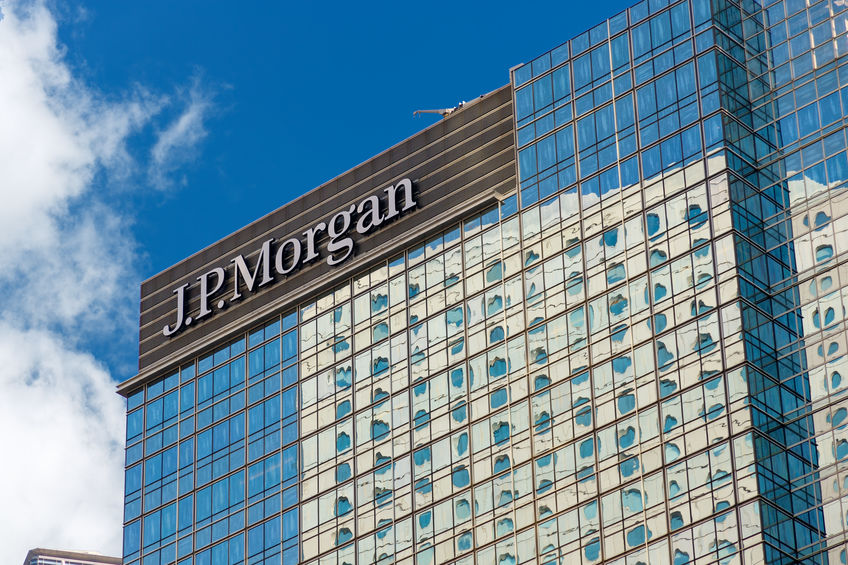 This week, JPMorgan Chase CEO Jamie Dimon along with 180 other CEOs published a statement committing themselves to rethinking corporate priorities and their responsibilities as leaders of business.
The majority of the Business Roundtable (BRT), a corporate lobbying group comprised of 200 CEOs that once was described as Obama’s “closest ally in the business community,” signed off on the statement, which outlines a number of vague commitments. Included are goals to deliver “value to our customers” by furthering “the tradition of American companies leading the way in meeting or exceeding customer expectations”; to deal “fairly and ethically with our suppliers”; to support “the communities in which we work” through “embracing sustainable practices across our businesses”; to compensate “[employees] fairly and [provide] important benefits”; and to generate “long-term value for shareholders, who provide the capital that allows companies to invest, grow and innovate.”
Such promises are in opposition to shareholder primacy, the belief that the purpose of a business is to create profit for stakeholders and the leading corporate philosophy in American capitalism, and are in in direct contradiction to the BRT’s 1997 statement which praised the shareholder-centric approach.
“We looked at this thing that was written in 1997 and we didn’t agree with it,” said Dimon following the statement’s release. “It didn’t fairly describe what we think our jobs are.”
Such a view is reminiscent of Dimon’s 2019 letter to JPMorgan Chase shareholders, which opened with “The American Dream is alive – but fraying for many,” and closed with “CEOs: Your country needs you!” Just as it is linked to fellow BRT member Larry Fink’s similar letter which discusses the growing trend of CEOs having political and social responsibilities. And topping these associations off is Amazon’s Jeff Bezos, another signatory of the statement, who in 2018 took an unexpectedly patriotic turn when he criticized other firms, such as Google, that pulled out of military contracts, saying, “If big tech companies are going to turn their back on the US Department of Defense, this country is going to be in trouble.”
More and more CEOs are stepping up to explain the moral vision of their companies’. Harvard Business School Historian Nancy Koehn says that this specific case of such espousing is a “response to something in the zeitgeist. They perceive that business-as-usual is no longer acceptable.” The reasons for such a change in approach could be changing trends amongst younger workers, such as employees’ demand that their employer believe in something beyond profit, the increasing number of consumers who factor a business’s social purpose into their purchasing decisions, and the constant threat of social media backlash.
CEO of Johnson & Johnson Alex Gorsky, who drafted the language of the statement, echoed this concept of CEO’s having a social vision when he noted that “there were times when I felt like Thomas Jefferson.” Standing in for the Founding Fathers in Gorsky’s vision are Pepsi, Walmart, Apple, and General Motors.
Reactions to the statement have been skeptical, with many critics calling into question whether any action will come from such words. “The bottom line is, I don’t think much is going to change,” commented Dick Bove, a Wall Street analyst. While Walter Olson, a Senior Fellow at the Cato Institute, said that “It’s not really clear whether they’re intending to replace any part of the system or do the same things as before, but … smile more.”
Bernie Sanders was more pointed in his reaction to the statement. “I don’t believe what they’re saying for a moment. If they were sincere, they would talk about raising the minimum wage in this country to a living wage, the need for the rich and powerful to pay their fair share of taxes.” Fellow primary candidate Elizabeth Warren also weighed in, saying that it was “a welcome change,” but “without real action, it’s meaningless … These big corporations can start following through on their words by paying workers more instead of spending billions on buybacks.”
The Council of Institutional Investors (CII), a group that promotes the interests of investors and shareholders, responded with concern, saying that “The statement undercuts notions of managerial accountability to shareholders.” “Accountability to everyone means accountability to no one … It is government, not companies, that should shoulder the responsibility of defining and addressing societal objectives with limited or no connection to long-term shareholder value.”
For Sale: Three Loan Portfolios Held By Direct Lending Investments
August 19, 2019 The Court-appointed receiver of the now-defunct hedge fund, Direct Lending Investments (DLI), is gearing up to sell three loan portfolios with an aggregate par amount owed of $29.8 million. The portfolios comprise of business loans, consumer loans, and merchant cash advances.
An official notice of the proposed sale will be published in the Wall Street Journal and other publications. Bids on the portfolios are required to be submitted by August 29th. An auction may be conducted on September 5th.
Updates on the receivership process for DLI can be followed here.
The demise of Direct Lending Investments was sudden. The CEO resigned in March, shortly before the company was charged with a “long-running” fraud by the SEC. The company had apparently suffered a massive loss of investor capital due to a single failed investment. The investment was in VOIP Guardian Partners I LLC, a company that reloaned money to telecom businesses worldwide. VOIP filed for bankruptcy on March 11th.
Gone with the Lend: Chase Bank Withdraws from Canada, Forgives All Credit Card Debt
August 12, 2019 In January 2018 Chase Bank released a statement detailing that it will be closing all of its Canadian credit card accounts on March 15 of that year, but customers should continue to pay their bills. Last week all of those debts were cancelled.
Coming as a shock to many Chase customers, the decision comes as the bank withdraws entirely from the Canadian market, in which it had been active for 13 years. “Chase made the decision to exit the Canadian credit card market. As part of that exit, all credit card accounts were closed on or before March 2018. A further business decision has been made to forgive all outstanding balances in order to complete the exit,” said Maria Martinez, Vice President of Communications for Chase Card Services, in a statement. “Ultimately, we felt it was a better decision for all parties, particularly our customers.”
As noted by one former Chase customer who benefitted from the debt forgiveness, it is questionably unusual that Chase Bank would take into consideration the wellness of those customers in a market they no longer operate in. Speaking to CBC, credit card rewards expert Patrick Sojka guessed that the decision came after concluding it would be too costly and time-exhaustive to pursue the debt, “[Chase are] still probably paying taxes, paying accountants, and for them, they just probably worked it out and [said], ‘Let’s just forgive the debt and fully get out of the country.’”
Chase has not released information regarding when the decision was made, how much debt was outstanding, nor how many customers were signed up for the two cards, the Amazon.ca Rewards Visa and the Marriott Rewards Premier Visa.
The response has been universally positive amongst customers, with many of them having been forgiven for debt that stretched beyond CAD$1,000 ($757). Christine Langlois, a 24-year-old Montreal student who owed CAD$1,300 and hadn’t made regular payments on her Amazon card in five years, said that “It’s kind of like I’m being rewarded for my irresponsibility.”
With further questions remaining, such as why Chase didn’t sell the debt instead, Luke Sheehan, Vice President of Marketing at RateHub, commented on the uniqueness of the decision, saying “It’s definitely an odd situation. I can only surmise that there was some bigger corporate play that meant had to [sic] exit the market quickly, and there must have been some benefits for doing that … As far as anyone seems to be aware, it’s a complete one-off. The chances of that happening ever again to anybody are so remote.”
Funding Circle Originated $377M of US Loans in First Two Quarters of 2019
August 8, 2019Funding Circle originated $377M of loans in the US in the first six months of 2019, according to their latest public report. The company said that “growth was proactively controlled” and that they tightened higher risk band lending and increased prices. They’ve now loaned more than $2B cumulatively in the US since inception and their growth is being led by “new borrowers” that are being lured away from traditional lenders.
Funding Circle still lags behind PayPal, OnDeck, Kabbage, Square Capital, and Amazon in the US in loan origination volume, according to the AltFinanceDaily small business finance rankings. Its closest competitors by volume are BlueVine, National Funding, and Kapitus.
PayPal Begins Offering Business Loans in Canada
July 28, 2019 PayPal has extended its popular working capital business loan program to Canada, according to company CEO Dan Schulman.
“This quarter, we began offering our PayPal business loan product to PayPal merchants in Canada, allowing them to access financing to build and sustain their businesses,” he said during the Q2 conference call. “This follows the expansion of our business financing solutions to Germany in Q4 2018 and in Mexico earlier this year in partnership with Mexican lending platform Konfio.”
AltFinanceDaily ranked PayPal as the leading alternative small business finance company by originations in 2018. They are followed by OnDeck, Kabbage, Square, and Amazon.
AltFinanceDaily CONNECT Toronto Kicks Off Today
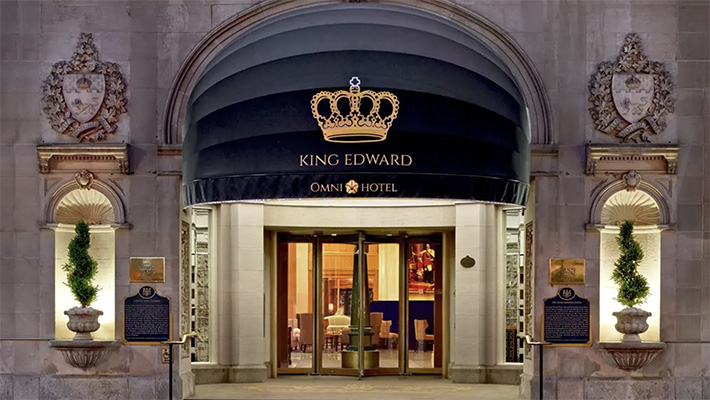
July 25, 2019Welcome to The Omni King Edward Hotel |
 |
|
Don’t be late! Registration and networking starts at 1:30pm at The Omni King Edward Hotel in Toronto.
Schedule of events:
Be sure to introduce yourselves to each of our sponsors and listen to our great speakers. |
||||||
|
|
||||||
|





 |