Business Lending
Should I Apply to Become a PPP Lender?
April 10, 2020 One question being posed in the small business finance community is whether or not you should apply to become a PPP lender. Unless you are a very large well-capitalized company with a deep legal and compliance bench, you probably shouldn’t.
Here’s why:
- You must supply the capital. While a federal mechanism is being put in place to offload the PPP loans you fund, you need the balance sheet to fund the loans in the first place. Also, consider that community banks have historically expressed frustration with the guaranty process and that’s when times and loan volumes were operating at normal levels. You must be prepared for hiccups to take place that delay or even possibly prevent offloading of some or all of these loans.
- You only earn a 5% processing fee on loans under $350,000. For larger loans, it’s a smaller percentage. You can’t even charge the applicant any fees at all so your compensation is entirely dependent on the SBA to pay you. Consider that your underwriting costs may offset some or all of that fee, leaving very little room for profit.
- You must have 2019 audited financial statements available for inspection by the SBA.
And you must have either of the following:
1.
- You must already have been applying Bank Secrecy Act-level compliance prior to this crisis.
- You must have been originating at least $50 million in business loans or other commercial financial receivables per year for each of the last 3 years consistently.
OR
2.
- You must already be a service provider to a bank.
- You must already have a contract to support the bank’s lending activities.
It’s a tough bar to meet for a small and mid-sized small business financing provider, but the program isn’t really set up to become a major profit center for lending companies, it’s supposed to be a support center for SMBs to keep workers employed. Initially, many banks were hesitant to get involved because PPP participation was going to generate LOSSES for them. It still might.
So what’s the incentive to be a non-bank PPP lender? It’s a moral pursuit on the front-end rather than a financially-driven one. On the back-end, it’s a tool for lead generation, public relations, and elevating goodwill value. If such lenders are able to execute successfully, it could further develop trust for fintech with legislators, regulators, and the general public. On the other hand, however, if they perform poorly, it could reflect negatively on fintech as a whole.
So if you find yourself on the PPP lending bench, you’re not missing out financially. You can still become an agent/broker should an approved SBA lender accept you. Such a role presents limited upside financial potential, so if it’s riches you seek, the PPP doesn’t provide them.
Lastly, becoming a PPP lender certainly won’t save a dying lending company. Making loans at 1% interest to distressed and closed businesses isn’t going to somehow save a company with an already damaged loan portfolio. It’s just going to put it out of business faster.
Should you apply to become a PPP lender? That’s up to you. Good luck!
OnDeck Has Applied to Become a PPP Lender
April 10, 2020OnDeck has applied to become a lender for the Paycheck Protection Program (PPP), according to a post the company made on social media. The online lender is one of the first to publicly announce an official entry for consideration since the application went live for fintech companies Wednesday evening.
OnDeck CEO Noah Breslow said on LinkedIn, “We are excited to be one of the fintechs delivering PPP loans as a direct lender – our team has been working around the clock getting us ready and now we wait and hope we are approved soon!”
The PPP Application for Fintech Lenders is HERE
April 8, 2020The SBA finally released an individual PPP lender application for Non-Bank and Non-Insured Depository Institution Lenders on Wednesday.
Note that it doesn’t actually say “fintech” anywhere on it but that’s because fintech is a colloquial term. This Non-bank designation and the requirements therein are similar to the SBA guidance published on April 3rd that was widely believed to encompass fintech lenders.
Canadian Small Businesses Face Tough Challenges As Government Passes Over Fintech
April 8, 2020 This week the Canadian government announced its coronavirus economic relief plans. Among them are two initiatives that aim to assist small businesses: the Canada Emergency Response Benefit (CERB) and Canada Emergency Business Account (CEBA).
The first of these is a wage subsidy that will cover up to 75% of a company’s payroll. The hope being that this will postpone the overcrowding and clogging of the Canadian unemployment benefits system, known as employment insurance. However this program appears to appeal to only certain types of businesses. With subcontractors not qualifying as part of payroll, there is the fear that CERB could leave many small businesses and startups that rely on freelancers unprotected. As well as this, there is a requirement that the company’s most recent month of revenue be at least 30% less than what it was at the same time the previous year. This specification again acting as an obstacle to startups and high growth businesses.
The second is a loan program that is capped at CAN$40,000 with 0% interest for the first two and a half years, and then 5% annual interest beginning January 1, 2023. There will be an opportunity for the remainder of the loan to be forgiven if the business has repaid 75% by December 31, 2022.
According to Smarter Loans’ Vlad Sherbatov, the situation in Canada mirrors what is happening in the US with regards to PPP. “There are very little details available about how people are going to apply to get the funds,” the President and Co-Founder explained. “Nobody knows what’s actually happening and nobody knows when business owners can actually anticipate to receive any funding.”
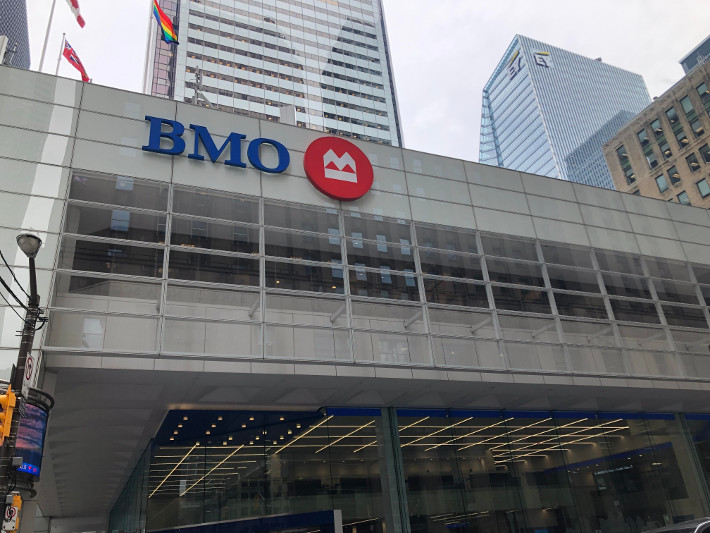 Expressing frustration that the Canadian government chose to ignore non-bank lenders in favor of allowing Canadian banks like BMO, RBC, and TD to distribute the funds, Sherbatov noted that it is the lenders who have the technology and processes to speedily disperse capital. “We did a survey that said almost 50% of business owners said they would shut down in less that four weeks without additional help … so it’s not that it’s just fine that there is help available, it’s how fast can [business owners] get the help, because every day that goes by makes the situation worse.”
Speaking to Kevin Clark, President of Lendified, he echoed Sherbatov’s concern.
“It’s all good that the government is making these decisions, but the capital has to move and the programs have to be in effect. So announcing these things is one thing, actually practicing them and executing them is another. There’s a time lag that could potentially put companies out of business and so, for us, it’s about trying to connect with a lot of these borrowers to say, ‘What can we do to help you with payments?’ But at the same time, we don’t want deferments for a long period of time because then our revenue base is challenged. So the fintech lenders all have significant challenges at hand, because defaults that move from within the normal course of between 5 and 10%, say now to between 15 and 25%, or even higher, are significant challenges for the operations of our business.”
Also a member of the Canadian Lenders Association, Clark is involved in the CLA covid-19 working group that was launched in March. Formed with the intention to assist the government’s approach to capital distribution, Clark was disappointed with the government’s decision to exclude non-bank lenders after the group reached out to both the Ministry of Finance and the Business Development Corporation of Canada. And with no government funding operation to assist, Clark, like many lenders in Canada, is turning toward his existing customers, hoping to keep their heads above water.
“What we’re all doing independently is trying to work with our customers to give them guidance on what is going on in Ottawa. And so most of us have made website adjustments to give some education to interested parties on what’s available in terms of subsidy. We’re trying to provide support to our customers through deferments and so forth, just as every lending institution is doing these days. It’s just that I think it’s harder for us and smaller firms that don’t have the margin and the wherewithal to withstand any sort of significant timeline in this situation. So it’s a little bit of week by week for us, trying to manage our own costs and so forth and keep our customer bases as happy and healthy as we can.”
Sorry, You’re Not Eligible For PPP Money
April 8, 2020 The rush to submit your PPP application may be for naught if you own an ineligible business. The SBA prohibits loan guarantees to “businesses primarily engaged in lending, investments, or to an otherwise eligible business engaged in financing or factoring.” If there’s any confusion as to what that includes, the SBA lists 7 specific ineligible business types under this definition in the statutory code. They include:
- Banks
- Life Insurance Companies (but not independent agents);
- Finance Companies
- Factoring Companies
- Investment Companies
- Bail Bond Companies
- Other businesses whose stock in trade is money
The PPP’s interim final rule refers to this statute as a rule for ineligibility as it applies to the PPP.
The statute does list a handful of businesses engaged in lending that may traditionally qualify for an exception. They are as follows:
- A pawn shop that provides financing is eligible if more than 50% of its revenue for the previous year was from the sale of merchandise rather than from interest on loans.
- A business that provides financing in the regular course of its business (such as a business that finances credit sales) is eligible, provided less than 50% of its revenue is from financing its sales.
- A mortgage servicing company that disburses loans and sells them within 14 calendar days of loan closing is eligible. Mortgage companies primarily engaged in the business of servicing loans are eligible. Mortgage companies that make loans and hold them in their portfolio are not eligible.
- A check cashing business is eligible if it receives more than 50% of its revenue from the service of cashing checks.
- A business engaged in providing the services of a financial advisor on a fee basis is eligible provided they do not use loan proceeds to invest in their own
AltFinanceDaily is not a law firm. Consult a CPA or an attorney to provide better guidance on your company’s eligibility.
Sen. Rubio: PPP Application For Fintech Lenders Expected This Week
April 6, 2020Update: 4/8/20 The PPP Application for Fintech Lenders is Here
 Senator Marco Rubio tweeted on Saturday that he expects the US Treasury Department to release a separate PPP application for non-bank lenders early this week. The Treasury and SBA have previously issued guidance on the minimum criteria a fintech lender would have to meet to be eligible, leading to confusion when the official application released a day later omitted any mention of fintech lending.
The rollout has not been perfect. One challenge facing fintech lenders is the supply of capital as the loans must be issued from their own balance sheet and held on their books for at least 7 weeks until they can be purchased by the federal government. Rubio said that we will need a defined purchase mechanism for such a transfer to take place to assist not only fintech lenders but also community banks.
The good news is multiple FinTechs including @PayPal & other online lenders are ready,able & willing to process #PPPloans for them & anyone else.But they need @USTreasury to release application for nonbank lenders to become certified.
I expect that very early next week. 5/13
— Marco Rubio (@marcorubio) April 4, 2020
#paytoday Small Business Coalition Formed in Response to Coronavirus
April 3, 2020 This week a cohort of businesses announced the formation of the #paytoday coalition, a union whose purpose is to promote the swift repayment of any receivables due to small businesses. The group, made up by Fundbox, SmallBizDaily, Womply, among others, was formed in the aftermath of covid-19’s rapid spread across the United States.
The coalition was the result of both conversations between the members about the fate of small businesses as well as long-term research, Fundbox Chief Market Office Leslie Olsen told AltFinanceDaily.
“We’ve been working on it for a couple of weeks, but it’s really based on some pretty deep research that we’ve done over the years, and more recently last year, that exposed this issue that businesses have of paying each other, where there are typically a large number of outstanding receivables in the market at any given day,” Olsen explained.
According to Olsen and the #paytoday campaign, there is currently $900 billion in outstanding receivables owed to small businesses. This mass of unpaid money combined with the pressures of the coronavirus and the info gleamed from their research, such as the stat that nearly 40% of small businesses have 30 days or less worth of cash available, are what’s motivating the group to act.
Currently the collective is running campaigns to get the word out and encourage those who owe small businesses money to pay them. Beyond that, #paytoday hopes to grow in coalition size and eventually branch out with larger partners.
“In our social campaigns, we’re inviting businesses like Target and Walmart, the Fortune 100 and 50, to see if they will join us as well as smaller businesses,” Tim Donovan, a spokesperson for Fundbox noted. “If you think about large enterprises and how many vendors they deal with on a regular basis, it could be thousands. So we’re trying to think about how we can create the biggest impact by having these bigger enterprises join the movement.”
PPP Lender Requirements
April 3, 2020Update: The PPP Lender Application is HERE
The elusive application to apply for PPP lender-approved status is expected to become available sometime on Friday. In the meantime, the SBA has published the requirements that a financing provider will have to meet to be eligible for approval. Federally insured depository institutions are already approved so these bullet points apply mainly to non-bank financing providers and online lenders.
- Must already originate, maintain, and service business loans or other commercial financial receivables and participation interests
- Have already been in compliance with the Bank Secrecy Act since at least February 25, 2019
- Have already originated, maintained, and serviced more than $50 million worth of business loans or other commercial financial receivables during a consecutive 12 month period in the past 36 months, or is a service provider to any insured depository institution that has a contract to support such institution’s lending activities in accordance with 12 U.S.C. Section 1867(c) and is in good standing with the appropriate Federal banking agency.
Loan underwriting requirements
- Confirm receipt of borrower certifications contained in Paycheck Protection Program Application form issued by the Administration;
- Confirm receipt of information demonstrating that a borrower had employees for whom the borrower paid salaries and payroll taxes on or around February 15, 2020;
- Confirm the dollar amount of average monthly payroll costs for the preceding calendar year by reviewing the payroll documentation submitted with the borrower’s application; and
- Follow applicable Bank Secrecy Act requirements
Notes from the SBA:
Entities that are not presently subject to the requirements of the Bank Secrecy Act, should, prior to engaging in PPP lending activities, including making PPP loans to either new or existing customers who are eligible borrowers under the PPP, establish an anti-money laundering (AML) compliance program equivalent to that of a comparable federally regulated institution. Depending upon the comparable federally regulated institution, such a program may include a customer identification program (CIP), which includes identifying and verifying their PPP borrowers’ identities (including e.g., date of birth, address, and taxpayer identification number), and, if that PPP borrower is a company, following any applicable beneficial ownership information collection requirements. Alternatively, if available, entities may rely on the CIP of a federally insured depository institution or federally insured credit union with an established CIP as part of its AML program. In either instance, entities should also understand the nature and purpose of their PPP customer relationships to develop customer risk profiles. Such entities will also generally have to identify and report certain suspicious activity to the U.S. Department of the Treasury’s Financial Crimes Enforcement Network (FinCEN). If such entities have questions with regard to meeting these requirements, they should contact the FinCEN Regulatory Support Section at FRC@fincen.gov. In addition, FinCEN has created a COVID-19-specific contact channel, via a specific drop-down category, for entities to communicate to FinCEN COVID-19-related concerns while adhering to their BSA obligations. Entities that wish to communicate such COVID-19-related concerns to FinCEN should go to www.FinCEN.gov, click on “Need Assistance,” and select “COVID19” in the subject drop-down list.
Each lender’s underwriting obligation under the PPP is limited to the items above and reviewing the “Paycheck Protection Application Form.” Borrowers must submit such documentation as is necessary to establish eligibility such as payroll processor records, payroll tax filings, or Form 1099-MISC, or income and expenses from a sole proprietorship. For borrowers that do not have any such documentation, the borrower must provide other supporting documentation, such as bank records, sufficient to demonstrate the qualifying payroll amount.
The lender does not need to conduct any verification if the borrower submits documentation supporting its request for loan forgiveness and attests that it has accurately verified the payments for eligible costs. The Administrator will hold harmless any lender that relies on such borrower documents and attestation from a borrower. The Administrator, in consultation with the Secretary, has determined that lender reliance on a borrower’s required documents and attestation is necessary and appropriate in light of section 1106(h) of the Act, which prohibits the Administrator from taking an enforcement action or imposing penalties if the lender has received a borrower attestation.
Lenders will need to complete this form with each loan.
Borrowers must complete this form.